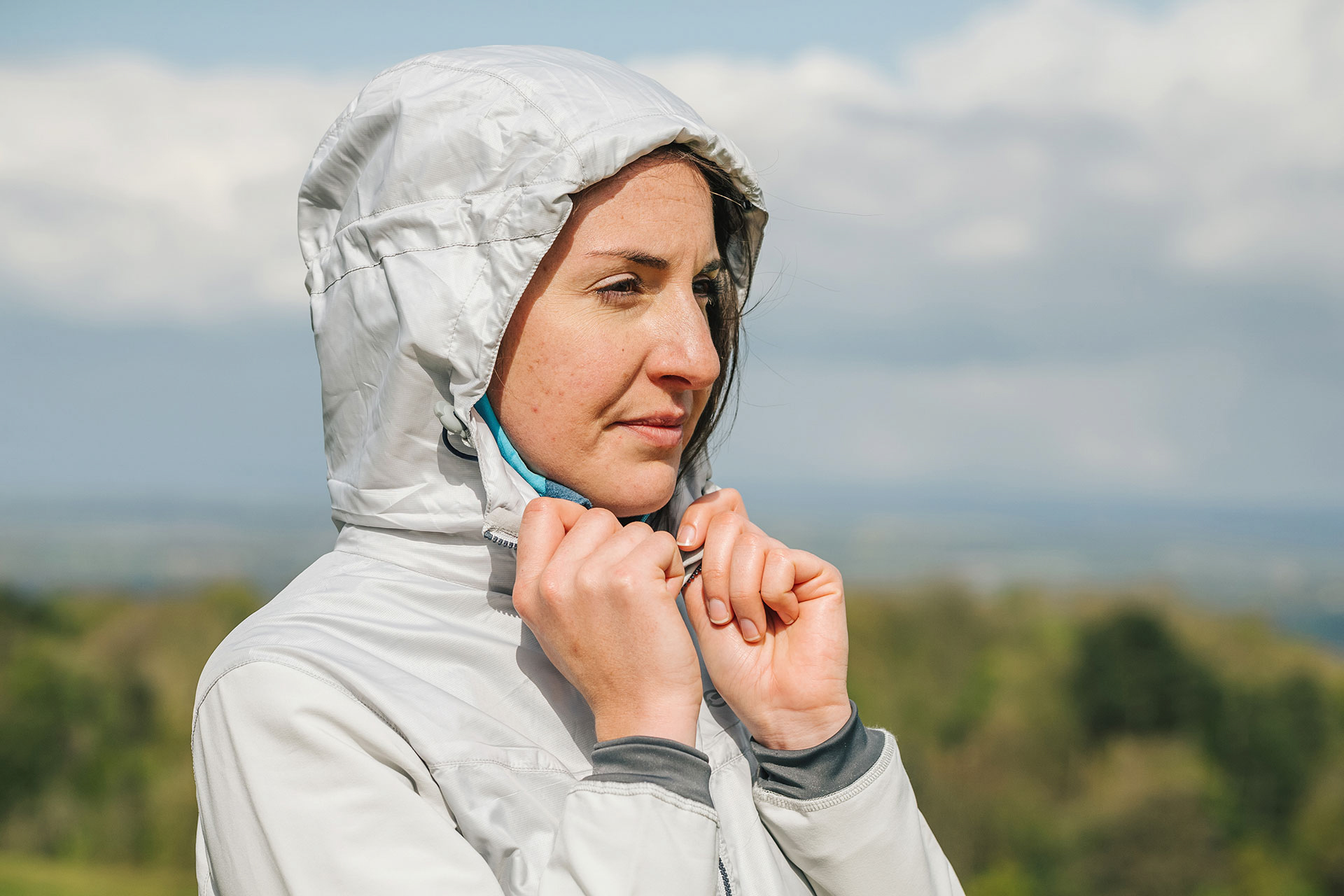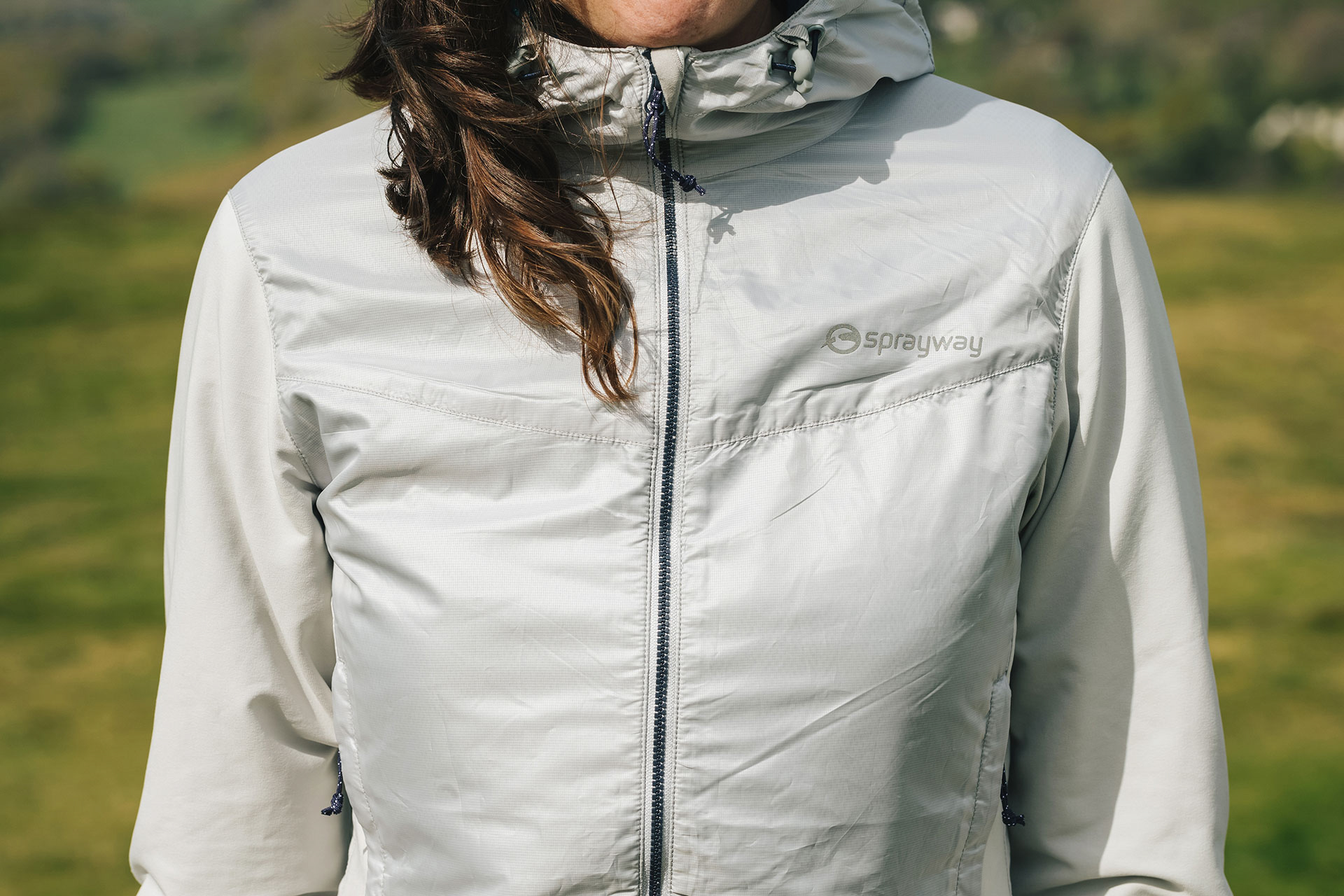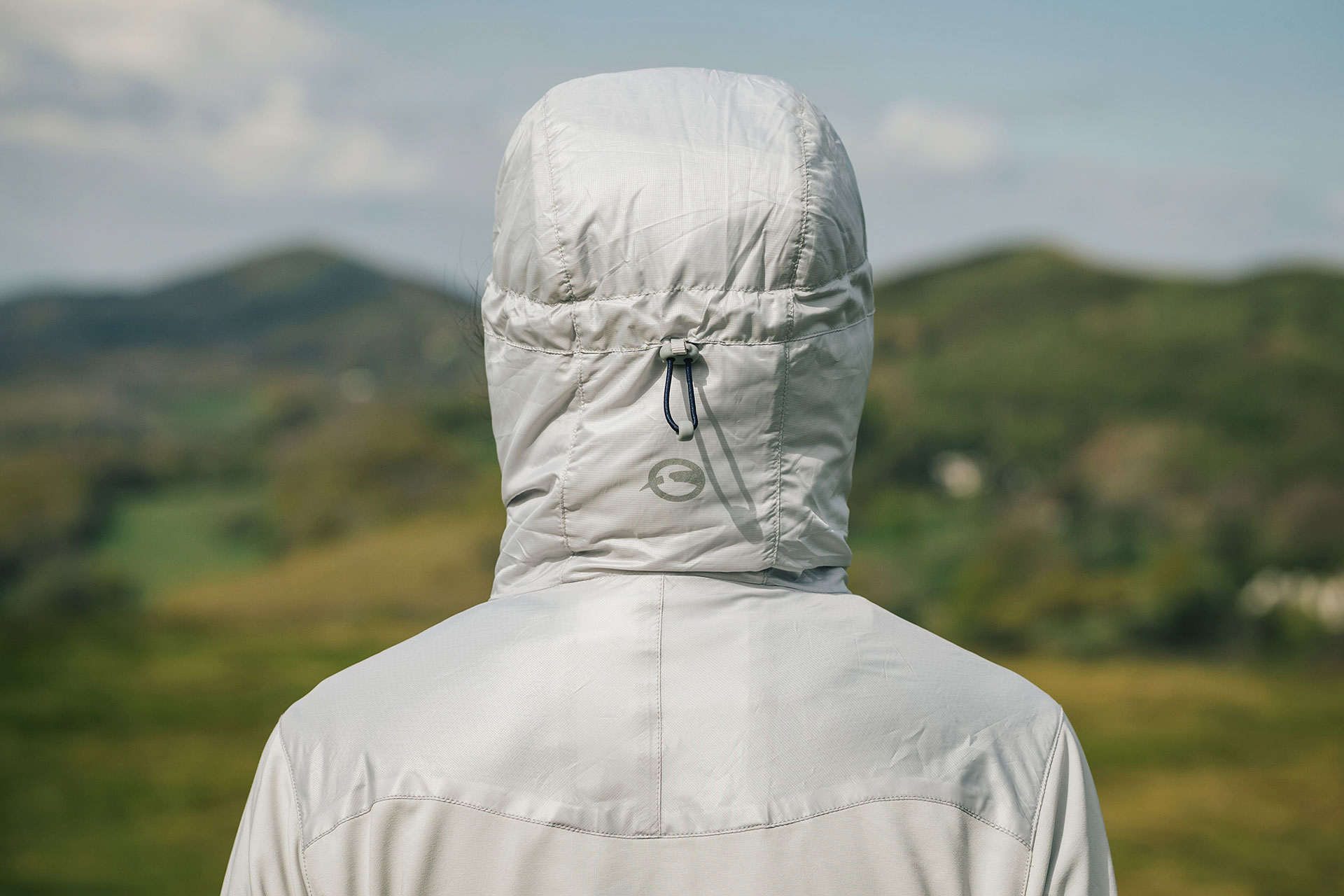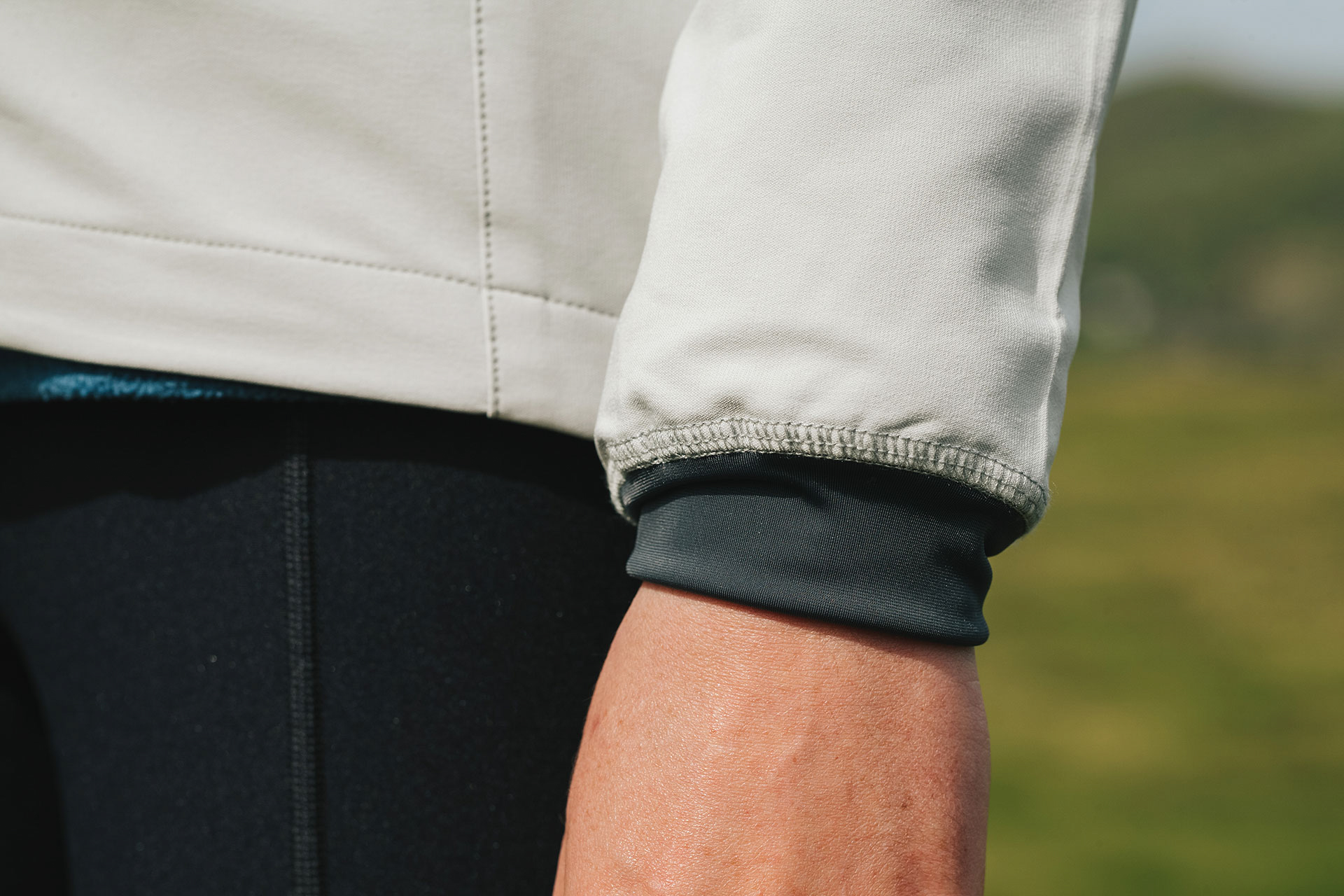
A integral thermal layer is indeed a must, even if you ski late in the season in splendid sunshine, it just takes one cloudy interlude to remind you how cold it gets at high altitude...
Don't understimate how much insulation you need, even when active, skiing is nowhere near as sweat inducing as hiking (in my case certainly). It is pretty cold up there in winter, at 2000m, the average temp will more often than not not rise above minus 10c. You won't notice too many people taking their insulation on/off except when lounging in the sun with a hot chocolate drink...
In all the years I've been skiing, I rarely remember having to do so except on spring days when the sun hits hard on you, at higher altitude.
Going down a slope, after all, generates a fair bit of venting...
me last New Year in Sweden in my garish coloured ski jacket in Salen at -25C (before the windchill)
And again in France in March up at over 3,000m on the glacier
Its a goretex ski jacket with primaloft insulation - does it get too hot, yes sometimes, and the pitzips are mostly well open to vent my core...
... however, I'm seriously thinking of also taking along a softshell and a fleece in December to Are in case the weather is milder. I like my ski jacket and even though sometimes its too warm for the conditions, when its cold, its the tops, and as I've mentioned before just wearing a baselayer underneath means I can cool down quickly by opening up those pits.
By integral I mean, top and bottom, good failsafe really. I also take good care of extremities, feet and hands as you need them in good nick!
I'm a bit surprised at how many mentions of "getting hot" there is, I must be an effortless skier, most of my time on the slopes is spent going downhill fast and I rarely feel like working up a sweat (unless I take a track through woods and I need to propel myself on flat bits). Even on bumpy, technical rides, only burning muscles in the legs seem to be an occasionnal issue.
I'm a beginner, only had three lessons in total, but love throwing myself down the slopes, and yes I really feel the burn in my legs, but probably because I'm a beginner, I find I'm really tense especially when the slope is busy, so perhaps its just that you've got more experience than those who get hot...
Oh sure can't comment about that. The problem is more the idea of building the insulation into the shell, which makes it markedly useless for an awful lot of other purposes. Or when the synthetic insulation gets rather compressed over time etc.
Or for that matter spending 400+ on a PL filled shell when you just get an extra fleece on your existing one for an awful lot less.
Still, just to emphasis how warm some of these fleeces are - examples chosen just because they publish the fabric weights! Montane Bear jacket = ~280 g/m2. Patagonia R3 highloft = ~200g/m2. Haglofs zone = 270g/m2. Others probably pretty similar, some warmer.
These are all using high loft thermal pro, which is a very open/weight efficient sort of fleece. Its probably still not as efficient for its weight as something like primaloft but don't think its an order of magnitude or anything.
Now of course the PL stuff works as throw over insulation while thermal pro fleeces don't! Still these things are genuinely warm (most of them probably too warm for the UK.).
Rest assured my legs burn a fair bit too Panda, experience or not, it's just that I don't really run hot (which is odd because when hiking I warm up very quickly...)
Busy slopes are a nightmare, get working on your peripheral vision and if you can grow an eye at the back of your head, even better
i would say don't buy anything unless you were going to buy it anyway. most comments have come from people who can actually ski. their 5 min hill will be your hour/hour and a half hill and you will get hot. surprisingly so.
at some point in the future instead of being the very hot puffing lump at the bottom of a slope you will be the slightly out of breath person taht has expended very little effort.
even hanging about when you're in a learner group the seemingly little you actually do will make you hot. surprisingly so. in between falling over for a good reason and just falling over randomly.
the most important thing, as a beginner, is making sure you can keep your base layer as dry as possible. this means thin and very fast drying like silk. merino or cotton - no as they take too long to dry. keeping your skin layer dry will provide great warmth from that layer so that when/if you vent because you are a bit too warm then that very cold venting air will not immediately chill you because of the wet base layer.
a few layers under your latok will be fine. take an extra fleece in case you need it.
on a chairlift make sure your head, neck and face are covered with something windproof and ideally warm/warmish. you will be amazed just how much warmer this will keep you. you'll be amazed at just how cold a wet base layer can be too.
i have never seen anyone put a belay jacket or other on to go up on a chairlift. these are usually opportunities to cool down a bit.
you may hate skiing so buying any specific kit will be a waste of money. when you get more proficient (i'm a really crap skier) you will have a much firmer idea about what you find good for you. i'm all in paramo (velez, salopettes), silk base & leggings and a montane top (deep neck zip for excellent venting)
silk base layer and leggings are fabulous - double up as a sleeping bag "liner". light, warm, very quick drying and easily washable and dry quickly if you've decided they've got a bit smelly.
I use a Rab Vapour Rise over thermals and find this works fine. Often take a hardshell if the weather is nasty and I need a better hood. Might carry a spare fleece in my rucksack if its especially cold.
As a concession to fashion I do usually wear ski trousers - easily picked up from Tk Maxx for £30 and mine have long inner thigh zips which helps with venting....
Wearing a lightweight 'action layer' and having a warmth layer you can stick on over the top certainly makes you look lightly-dressed by comparison with many people on the slopes.
For my first year skiing in Bulgaria (1996), I was in borrowed salopettes, a base layer, 200wt fleece and Gore-tex jacket. I got very hot when doing stuff (falling over, trying to get up), and then cold when standing around waiting my turn to fall over. A lot will depend on the tuition style and size of group.
Once you get proficient, you usually seek out more difficult stuff (powder, moguls), so you can end up expending just as much effort. Of course, there's always a bit of cruising...
Muttering to friends about career options recently, they surprised me by suggesting I train as a skiing instructor. I don't think my skiing's good enough, but they seemed to...
Rank amateur skier here! My experience don't buy anything special for the torso. 3 layer traditional idea will work but its easier to vent with a 2-layer insulated option as others have advised. The more specific clothing to think about, Parky has mentioned the focus on any exposed skin, the face and the closure needed to prevent cold air getting to the eyes which will cry and ice. I used cycling glasses and two Buffs.
However, think special about the legs, much thicker insulation than you'd normally consider as that's where a lot of heat loss will occur. Its not obvious, but when you are working your legs, you are making heat, but the blood is pumping into the whole leg so fast any chill from the legs is being pumped back into the whole body and that can lead to cold feet, cold hands, etc. So consider getting some insulated leg protection, cheapest would be ski-specific, used ones from some keen type who's selling off something 90% as good as new ones for likely 30% of the new cost, or if you want to invest for hiking then something like the Paramo Cascadas.
The harder you work in cold situations, the more important the legs and the less important the torso.
For my first ski trip I bought a pair of cross ski pants for £30 in the sales, cheap and cheerful they had a venting zip down the side and they did me fine, as they kept the wind off my legs, had a thin insulating inner and I could cool down when the going got hot.
Then last December as I felt I was improving I bought a superdooper pair of Salomon ski pants with some impressively high numbers about water resistance and breathability which I still had no idea what they mean, but they had really nice stretchy material on the outside as compared to my old pair, they were also reduced from £150 (to £75), so I thought I was getting a bargain.
They are great... except for one thing... they have no venting and when its too hot... there is nothing I can do about it
I use Paramo trousers all the time Skiing, with a paramo jacket and/or a fleece, depending on weather, temp and precipitation. A buff in beany mode looks after my head, mostly as protection from the sun.
I find 'ski' jackets way too warm most of the time.
I've just been looking at the Keela website and their advanced belay jacket looks decent if that is what you want. IIRC 133g/m2 primaloft and looks a decent product for about £70 full RRP.
Paramo works well for skiing. I prefer stretchy trews/sloppets to theirs, but for jackets they're about ideal. Bit expensive if bought just for skiing, but if you have one for other stuff anyway (or buy one to use for other stuff) then an excellent choice IMHO (BASI instructors of my acquaintance seem to agree, usually skiing in Aspira jackets).
i just used my walking gear trousers - thermals and RAB VR if it was extremely cold, just the RAB if not.
and icebreaker top, thin fleece, and photon hoody equivalent is enough for my active skiing. i'm only really a red (with occasional black) skier, which means downhill is not a cardio type of exercise for me at all - tough on the legs, but no lung power involved - and so i'm not generating much heat. nonetheless, that set up worked for me. long chairlifts would get a bit nippy if the wind was up, but zipping up with a warm hat and gloves would usually ensure i survived to the top.
for some bizarre reason, walking jackets tend to be easier to move about in (cut more cleanly) than the ski jackets i've tried and rejected before.
so i'd say don't waste your money buying two types of gear.
for some bizarre reason, walking jackets tend to be easier to move about in (cut more cleanly) than the ski jackets i've tried and rejected before.
The reason is that probably most ski jackets are by-the-numbers "must look good at apres ski" form over function while walking jackets aren't. But try a purpose built ski jacket from the likes of Patagonia, as opposed to Primark, and I think it would be a different story. As, of course, would be the price...
New Youngest Brit Woman Everest Record Dubai-based 18-year-old Briton Leanna Shuttleworth breaks Bonita Norris record and completes the Seven Summits at the same time.