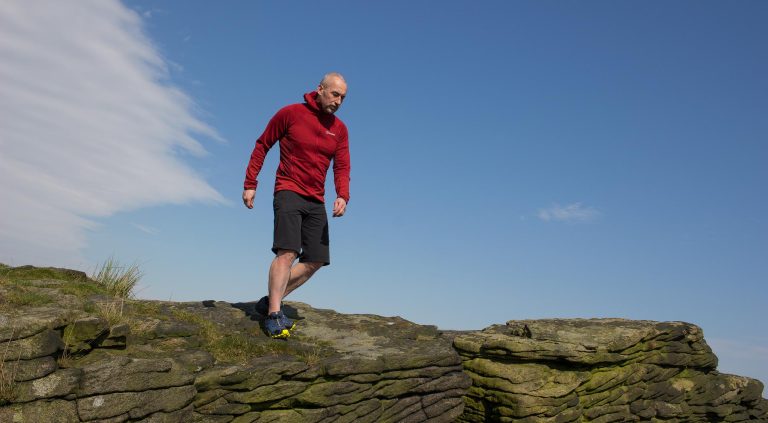
Having read Jon's article, it sounds like these new Paclite III waterproofs are the dogs bo**ocks.
Does anyone have any recommendations on which would be best for running in ? The Berghaus smock looked very lightweight in the photos but didn't appear to have any manual venting, e.g. front and rear horizontal vents like the Concurve Extend or venting pockets or 'pit zips'.
Does anyone know of a Paclite III jacket or smock that is both lightweight and has lots of vents ?
I would not consider a real world shoot-out as fair, when you are compairing the breathability of three fabrics/garments that are vastly different.
A 270g-ish paclite smock (v) a 500g-ish eVENT jacket (v) a 840g-ish fully specced mountain-jacket. Are these comparable weights?
Whilst I fully appreciate the test was focussing on the breathability of the garment, the weight comparison needs to be considered in line with weather conditions, temperature, humidity & altitude.
As a suggestion, if you are going to compare fabrics then please compare the fabrics based on identical products and the similar useage they will face by the wearer. ie Mountain Jacket (v) Mountain Jacket up a mountain and not a hill.
Andrew did you read the article? eVENT seems to be the dogs bo**ocks, not Paclite.
The eVENT material used in this test, and the the design of the Lowe jacket is a full on mountain jacket, not a light weight smock like the Berghaus.
If a full weight eVENT garment breathes better than a light weight Gore jacket, then I'm sure it wont take too much imagination to come to the conclusion that a light weight eVENT jacket will be absolutely fantastic.
And guess what they are! Lowe Alpine have been very clever in their marketing of eVENT, making it seem like its exclusive to them, but guess what it's not. I've already bought an eVENT jacket and it's fantastic, but it's not made by Lowe Alpine it's made by Pearl Izumi. Pearl Izumi may be a new name to ramblers but one that will be familiar to cyclists and runners.
Pearl Izumi have been making jackets out of eVENT for a while now, so have therefore worked out all the bugs that will be inherant with Lowe's first generation jacket. They make a full range of jackets from full-weight mountain jackets to ultra-light running and cycling jackets.
Basically Andrew dont waste your hard earned on a Paclite jacket when there is already better products on the market.
The one thing I'd add is that I've run in both New Paclite and eVENT jackets and it's not quite as straightforward as it might at first appear. First, both fabrics are very good compared with previous breathables, but after running at a medium pace, say 12 on perceived exertion out of 20, I still overwhelmed them.
Next, there's some odd stuff going on with the way they work. It was interesting that the eVENT felt more comfortable walking uphill than New Paclite. Lowe say this is because eVENT transfers vapour directly while Gore fabrics effectively need to convert the vapout into liquid, transfer it across the PU layer and membrane and then clear it from the surface.
The buffering effect of the protective layer on the inside of New Paclite, I would reckon, reduces this effect by soaking up some of the existing perspiration and preventing the internal environment getting very humid.
When Paclite does get overwhelmed, it seems to happen very quickly and suddenly, eVENT seems more graduated. On top of that, have been using both fabrics more generally and the test we did is only a slice of life as it were. I'm pretty impressed with eVENT generally, though I have some reservations about the way the Lowe test jacket is constructed.
Anyway, eVENT's not available from Lowe till autumn and then it'll be aimed at top end alpinists. New Paclite is more in the lightweight sector of the market. Both are good, neither is a miracle though and you may be better off with one of the silicone encapsulated fabrics from Patagonia, Golite or Macpac for running.
Oh, and Jonathan, I appreciate what you're saying and we're not claiming that the test is the be all and end all of breathable testing - we're looking into getting hold of the equipment to carry out a more objective, measured test of the various fabrics on the market.
Meranwhile, you tell me when the last time was that a print magazine even tried to compare breathability beyond a load of very subjective comments?
I would point out, in the nicest possible way:
• effort at a sustained level is still effort at a sustained level wherever it is. It'd be just as valid on a treadmill as a mountain. We weren't testing the technical features of the garments, just how well they breathed. Yes, breathability will vary according to relative temperature and humidity, but we're not in a position to introduce those variables.
• re the weight of the garments: so what? The breathability is down to the membrane system rather than the face fabric or jacket design. If you cut the Berghaus jacket into a mountain jacket design, the breathability would be unaffected. We deliberately used the jackets closed up so that venting didn't effect the results. Ideally we'd have included XCR as well, in fact next time we'll do a direst comparo of XCR and eVENT.
• I would still buy a well cut jacket with appropriate features made from a slightly less breathable fabric than a poorly made one made from a highly breathable one every time.
Jon, I thought your article was very scientific and objective - I haven't come across a similar comparison yet.
I realise that paclite fabric is not sufficiently breathable on its own for running, which is why I was looking for a jacket with additional manual venting.
I saw the Pearl Izumo Allegro jacket, which looks nice but is nearly twice the price of similar Paclite III jackets.
Would the Rab Positron jacket fall into the category of silicone encapsulated ? Are these truly waterproof, I don't want a pertex style jacket that can't withstand a couple of hours of heavy rain.
Jon, with access to all your test gear, what would you use if you were setting out for a 10mile run over Bleaklow and it was raining hard (or sleeting) and cold ?
I've not used the Positron and I don't know enough about the fabric but in general, jusdging from the spec', it's another highly water resistant material that will tend to breathe more effectively than a waterproof.
In your Bleaklow scenario, I'd probably opt for some sort of Encapsil type top or Windstopper on the basis that whatever I wear, I'm going to get wet anyway - with new Paclite from perspiration, with a good windproof, from the outside. But if it stops raining, which happens occasionally, the windproof fabric will breathe better. If it was really cool, I like the MHW Tempest because it has a built-in thermal lining.
There's a psychological thing going on here, which is that you feel more protected in a waterproof and, if it's really bucketing down, I'd probably opt for one knowing that I was going to get wet anyway. Not much help really I know. It's dilemma city out there.
Jamie, which Pearl Izumi jacket do you have and what do you use it for ?
I already have a TNF Trail Vest which is great as a windproof and fine for a summer shower but really isn't any good if you don't want to die of hypothermia in heavy rain at this time of year.
It's maybe a little odd to use my first message on the site to send members to another website, but Backpacklight.com ran a comprehensive article on moisture accumulation in rain and wind shells. The tests they carried out concentrated on accumulation of moisture, rather than subsequent dispersion, but give an interesting guide (although some of the test items may be difficult to come by in the UK). I have to agree with the statement that Gore wouldn't have sold so much fabric if most people used their jackets for more than walking around town.... http://www.backpackinglight.com/index/article.asp?did=3
I don't know about you lot but I start feeling dampness when I start planning a run, never mind after putting a glorified plastic bag over my torso.
You run - you will get wet, raining or not.
I tend to run in windproof jacket at the most (pearl izumi washed to within an inch of it's life) then put on a shell when I stop. I would certainly not be spending top dollar on a jacket PURELY for running. MTP :)
I'm not sure that more venting is the solution. If you're out running for any length of time, the rain simply enters through the apertures.
The best solution I've found so far for really driving rain is a Patagonia Stretch Velocity Shell, technically windproof only, but seems pretty water-resistant to me. And it breathes, well, -ish. For the usual wimpy London rain (a light drizzle), I find a Patagonia Stretch Velocity Vest (like the Shell but without sleeves) does the biz adequately. I find it doesn't really bother me if my arms get a bit wet, but as the torso is kept covered, I don't get cold from being wet.
But neither solution is perfect really. I always marvel at how the Tour de France guys manage to keep pumping it out in the rain with their distinctly non-breathable clear pacamac things - but then comfort is never a priority for them I guess.
Joan, comfort definitely IS a priority, their (pro riders) need to be well protected & comfortable if they have a hope of finishing a 3 week 2000k tour covering two mountain ranges! They use the same gear and principles (layering) as walkers do (did?). Some of the materials are different but a lot of that is down to tradition & fear of change!... Base layers traditionally wool, wicking mid layers and when it gets cruddy in training they will wear breathable shells. In the tours they tend to wear see through shells because if they don't they will be DQ'd for not showing numbers.. Interestingly (if you are a gear/bike trekkie like my good self) Assos make a clear, breathable shell - costs the equivalent of two grandmothers and a couple of limbs though.
Well I went out and bought a waterproof today - a Concurve Extend 2 layer Goretex with vents front and back. Not Paclite but seems sensibly designed for running.
I can't believe the weather forecast is clear and sunny for days on end !
If you want to make tests reasonably objective and scientific, you should have as few variables as possible. When testing three different outer layers, the base layers should be the same each time...
Comment on Encapsil: After extensive research I bought a Patagonia Encapsil jacket and have used that for two years now... The material was amazingly water resistant --- in the beginning. Water would just bead off. Until it didn't anymore (just like my previous Goretex). It started to soak up water and took a long time to dry... After emailing with both Patagonia & the original Encapsil makers, I finally found out that you have to throw the material in the dryer regularly. That's nowhere on the labels, and usually I don't carry a dryer in my backpack. It "breathes" well though, and is very, very windproof.