I've always had high regard for the fitness levels that fell runners have, even though I reckon they're all barking mad
I'm attempting to do the welsh 3000s again at the end of July, however, this time I'm aiming for sub-10 hours which means for the first, and probably only time, I'll be running for significant parts of it.
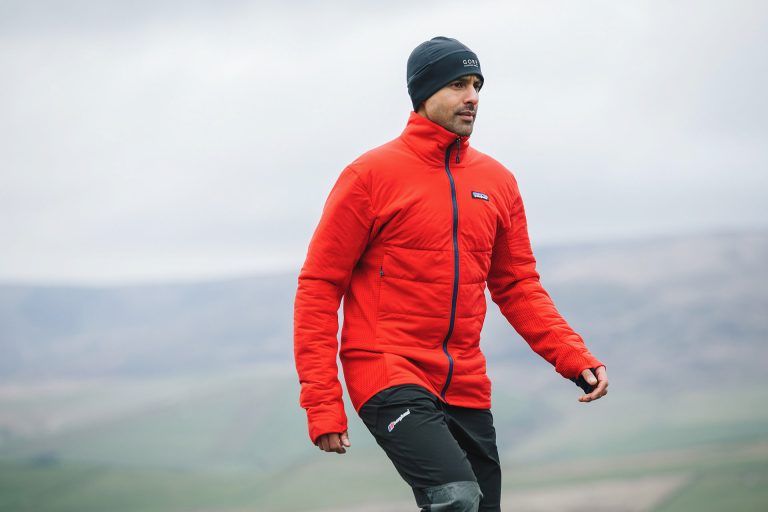
I know the route well, what I have no experience of is travelling so light. All the runners I've seen seem to have a baseball cap, vest, micro shorts and trainers. The only usual additions seems to be sports sunglasses, a watch and a small bumbag containing "something".
Given I have to travel so light, my questions are these:
How much fluid would you expect to go through a) on a hot day, b) on a reasonably warm day (say 15c)?
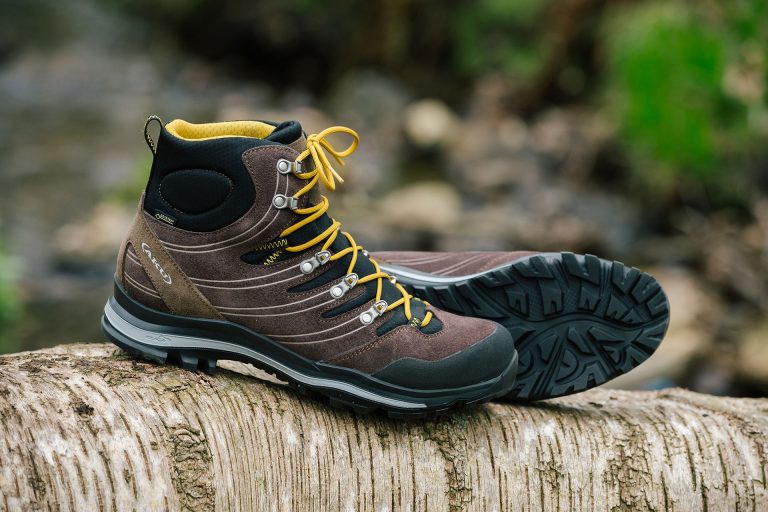
What footwear do you use? From my current gear, I was going to use Scarpa Helliums, however, they're useless at keeping feet dry. From experience dry feet for me are imperative as I got blisters after running for 10mins with wet feet whereas I've run for 2 hours with no blisters in the same trainers. My alternate choice would be my trainers that I ran a half marathon in back in March.
From my observations, I reckon a significant number walk the uphill sections and run all of the flats and downhills. Is this a reasonable tactic? I hope so as my timing are based on an average of 6.5mph on downhill/flat, with only 2mph on the uphill. (These times are aiming at not breaking into my anaerobic thresholds.)
BTW, I'd thought of camping the night before, just below Snowdon's summit or below Crib Goch at Cwm Uchaf. The latter has the advantage of not carrying gear over Crib y Ddysgl, the former means I'd start an hour fresher and 340m higher from my overnight rest. Any opinions? Any good spots?
Finally, has anyone done this route sub-10 hours and got some tips to pass on?
Just on your running tactics, some observations from a non-runner who runs a bit!! I'm hill fit for walking but I don't run at all, but in the last year I've got into doing the Lakeland Trail Race series - I just turn up on the day and run them with no specific training. So far I've done 4, of 21km, 15km, 15km and most recently 24km. They're all on tracks and bridleways so include some rough terrain, and they all have several hundred metres of ascent / descent.
On the first I carried a small bumbag, on the others nothing but a windproof in my shorts pocket. My tactics are like you're thinking, to walk the uphills (except occasional very short sections), run the downhills (which is brilliant), and run as much of the flat as I can (which is usually most of it). But the thing I'd say to bear in mind with that isn't aerobic performance, it's the pounding that your legs take shock-absorbing the downhills. On the 15kms I've been fine, the whole thing lasts around 1 hr 40 for me and my legs handle it. On this most recent 24km it took me just under 3 hrs, so I was averaging around 5mph, but my legs were shot towards the end - I forced myself to run the last big downhill, but I really couldn't have kept up that level of activity for much longer. The idea of continuing like that for 10 hours in all doesn't bear thinking of.
It sounds like you run more regularly than me, which is undoubtedly going to be a help. I suppose I'm saying that I know I can walk pretty fast over mountains for a long time, and I can run some of the terrain faster than I would walk it, but there's a definite trade-off on the endurance side of it, and you'll need to be careful about where exactly that trade-off kicks in for you.
Matt's right - running lots of downhill without good specific training/practice/skills mashes your legs. This is simply because the natural reaction to running steep downs on awkard terrain is to brake, which especially hammers your quads but throws your body out of sync in all sorts of ways which is very tiring.
It's probably a better tactic to tackle downs as a relaxed jog, just flicking the feet out as gravity takes you, sliding with any loose stuff.
Definitely walk all the ups, keeping well out of the red zone where breathing labours and lactic builds up will not only make sure you're in a better state later on in the day but also means you're not wasting time stopping while your body catches up with the oxygen debt.
I really hope this thread continues, as the walk/ jog philosophy is something I am keen to try for next year's attempt at the fellsman.
It's way off yet (May) but I reckon to build up a good running fitness base between now and say October, then start pushing for hills and stuff, then stretching the distance out as well.
When I did the Welsh 3000s I wasn't really trying to do a fast time but did infact end up jogging some or maybe even most of the downhill & flat bits in walking boots & standard day pack stuff. Took 15 hours Pen Y Pass car park to Aber Falls car park including a couple of leisurely breaks and god knows how long faffing about somewhere I'm still not entirely sure on Tryfan in the mist. So I don't think 10 hours is an unreasonably hard time to achieve if you're talking about Snowdon summit to whatever the last one is. If I was doing it again like that I'd wear my usual Asics off road running trainers (I think it's a pretty dry route underfoot if the weather's ok, isn't it?), shorts or leggings & T shirt & just take a bum bag with a hat & windproof or lightweight waterproof top for if the weather gets dodgy, assuming I had someone to meet up at the roads for food stops. I'd also think about working out if there's enough places to get water en route rather than carry any which I expect there is unless you need to drink very often and it's seriously hot. Walking the uphill bits is still the bit that wears you out more than the running. I remember feeling pretty low going up Pen Yr Ole Wen but fine again running along the tops after that. Pen Yr Ole Wen is the end really as far as effort goes.
Thanks for your responses. Sorry I've not replied before now, too much life going on
Matt: My training has gone to pot recently. I've been managing to do 10 mile/week for a month or so with one 7 miler. It was much harder than when I peaked at the end March so I'm a bit concerned about this. Windproof for the tops is a good point.
Marcus: I had been doing a lot of stepper work in the gym up to March. I think I'm going to use the remaining time I have exclusively on this, using my work-lunch break to get some distance in. The downhill running is something I wish I'd had time to do beforehand but events have conspired against me. I'm just gonna have to get my technique right on the day. I've done a small amount and not had problems afterwards so I think my distance walks have season my calves and quads a bit. I know it's a different motion, but I'm hoping this'll pull me through.
Mick: from what I've heard, runners fall into one of three categories. Those who are injured, those who in rehab from injury and those that are about to be injured . I know from my exploits in the last six months that I've picked up a few problems that I've never have as a walker. I should know better than to embark on this personal challenge stuff. Still, it keeps me out of my family's hair!
Steve: It sounds like with favourable conditions you'd have blasted the 10 hours. This is encouraging and makes me determined to give it my best shot. When I first did the W3K, we ascend Pen yr Ole When via its east face/ridge. I felt I was going to die and it took me almost twice as long as it did when I tackled it fresh on a training route. It was a relentless slog. This time we're heading up the south ridge scramble, opposite Ogwen. I've done this a few times and enjoyed it.
I'm gonna give this a go, however, I know I'm not prepared anywhere near enough. If nothing else, I'll get a day on the hill.