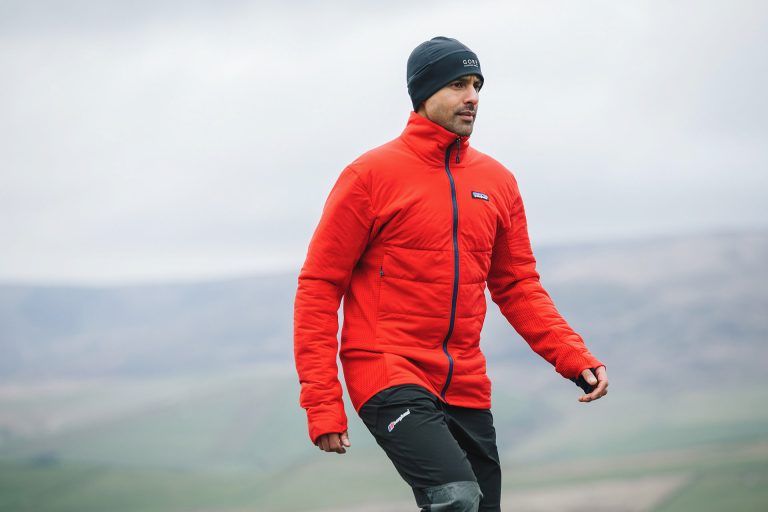
 Hi folks, Has anyone come across any company apart from PHD that offer temperature ratings for their insulated synthetic clothing. Even though most manufacturers don't give ratings for down clothing a rough temperature rating can be figured out it will go by looking at fill quality, fill weight, construction but with synthetics its not so easy. Cheers, Stephen
|
 |
I've not seen any firms that do the same, and I can't say I miss such "information" as I don't find it that useful as supplied by PHD. I mean what are you supposed to do when you're wearing one of their -5C rated jackets and it gets to -7C? Take it off because it's not "warm enough". As you say, it's much more useful to judge for yourself the temperature range of a down garment by the fill power and weight, and I reckon pretty much the same applies with synthetic insulation. If you know the what gsm the insulation is that's being used you can make a very shrewd guesstimate of how warm it will be, taking into account your own body and the other clothes you have/intend to wear. In any case I reckon it would lead to another advertising war of bxxxsxxt -- "The lightest -10C rated jacket in the world" and the like.
|
 |
 Hi Guy, I find it easy enough to compare Primaloft to down, I find my Haglofs Lim Barrier Pullover is as warm as a 200 weight fleece. I know my Barrier Hoody is about as warm as a 300 weight and 100 weight fleece combined, that was easy enough for me to figure out mostly by experience. My problems is that I have no real comparison when it comes synthetic vs down. In recent -10 temp (walking in the city) I have found that about 200gm2 primaloft is probaly as about a warm as my PHD Yukon (-15 rated) any colder than this I would of had to add a down or synthetic vest. For me it would be great if there was some way to calculate what weight of synethic fill is required to match a certain weight and quality of down. I would like to have the option to leave all my down gear at home but still be warm enough if things turn nasty. Cheers, Stephen
|
 |
 conversely giy i'd know it would likely keep me warm if the temp was -3C. it's just a guideline without guesswork.
|
 |
 Guidelines are handy when comparing products, its nice to have an idea of what a manufacturer has tested the product too, but for peace of mind independent reviews from the likes of PTC and a few other sites that aren't affiliated to the outdoor industry 
|
 |
 BPL.com is a great resource for independant information Stephen. I think there are so many types of synthetic insulation that a chart would be almost impossible. There are about 6 different types of Primaloft alone. Then you have Climashield, Polarguard, etc, etc. Then you can have different weights of each make!
|
 |
 Hi Mike, That's very true Mike about all the differing types of fill but in saying that companies that sell synthetic sleeping bags give a temperature rating, I know at times these figures can be optimistic. BPL is a good site I have been toying around about subscribing, I just was not overly enamoured with the review of the Crux X2 I bought of them for a few dollars, I expected a real life review but it was more of a professional look see, don't get me wrong it was a good review but they just did not put it through its paces. Cheers, Stephen
|
 |
 Well actually the best bits of info as regards insulation are in their free forums. Theres a very helpful soul on there on a mission to explain the precise details of such things to people Search for Nisley and hunt around a little.
|
 |
 I've not read TRAIL for a year or two but didn't they get Leeds Uni to give insulating jackets a Tog rating? Or was that just sleeping bags they did that with? I would think that this would yield some kind of relative ranking but in the real world it may not be that helpful as the outer fabrics will have different wind resistance levels. Anyway Stephen you must have owned them all by now so you might have enough field data to construct your own just-how-warm-is-it-compared-to-other-coats table?  )
|
| Edited: 21/02/10 12:20 |
Yes, a search for Richard Nisley on BPL.com will yield all kinds of useful information including comparative warmth charts for a range of popular pieces of US clothing from down to synthetic fill to fleece to baselayers. You need membership for the review 'articles' but there's loads of free info in the forums sections, particularly 'the g spot' where Richard posts. It helps to appreciate that most discussions relate to US conditions, experience and an approach which isn't always directly transferable to the UK backpacking environment and conditions, but lots of great ideas and info. Personally, as someone who runs pretty cold, I don't always find warmth type ratings particularly helpful as much depends on personal metabolism etc. I'm always reading reviews and comments of, 'I wore xx here in xx degrees and I was toasty' knowing full well from experience that I would need considerably more to keep warm in the same conditions!
|
 |
 Hi Mike\Jim, I will have a search of BPL so, I mght even fork out the 20 odd dollars to join.  Hi Justin, I do remember seeing some tog rating on clothing on lfto but did not make much notice of it at the time. I definitley have a good few synetheic items in the wardrobe but not as many as one might think. Cheers , Stephen
|
 |
|
|
 |
 I think there are two ratings we should take notice of: (for sleeping bags) the EN13537 European standard for sleeping bags because it is a reliable standard test. Once you have discovered that you sleep slightly warmer, or much colder, or whatever, than their target individual you can look at their rating for any sleeping bag and know in advance what you are buying. Not all sleeping bags are tested to EN standards. Look here for a much more detailed explanation of sleeping bag tests and standards (for anything else) the TOG rating. This only measures the thermal resistance of the material(s). Now two sleeping bags may have the same TOG for their materials but one may be warmer than another because of better design/construction, so TOG is not the whole story, but it gives a very good indication. We tend to have an idea of what a TOG is because we sleep at home under a quilt with a known TOG rating. The figures we should ignore are those from individual manufacturers who quote "comfortable to 2c" without specifying which standard they are following.
|
 |
 Cheers Frum, Some good info there
|
| Edited: 21/02/10 18:27 |
 <!--[if !mso]> <style> v\  {behavior:url(#default#VML);} o\  {behavior:url(#default#VML);} w\  {behavior:url(#default#VML);} .shape {behavior:url(#default#VML);} </style> <![endif]--> Got some great info from the above article, thanks again guys.  I knew already that 100gm2 of PL1 has a clo of .84 and Sport .74. Interesting enough the chart shows Montbells Ecelsoft has a clo of.48 for 50gm2. From looking at the figures for the down jackets and by checking their fill weights on the Montbell website I was able to estimate than 100g of 700 fill EU down has a clo of 2. If I was going out on the hills tonight I would be carrying a jacket in my sack of about 200g 700 Eu down which would have a clo of about 4. Maybe my figures are wrong but if I wanted a clo of 4 using synthetic insulation I would need to be packing an awful lot of it. Cheers, Stephen
|
| Edited: 21/02/10 18:31 |
 not sure what happened above with all the extra charatcers. I checked out this and there is some very good info and even an apperance from Mike Parsons from OMM here
|
 |