ok so can i ask an incredible daft question, im looking at making my first down bag purchase. and we all know that water is to be avoided. but sometimes it cant, ie its raining outside you will bring some moisture in with you, or sweating thru the night (not that im ever warm enough) will the sleeping bags stillwork with some moisture. i might buy a waterproof bag for it to carry short distances in the rain and protect. so what im asking is a wee bit moisture alright. and is their a way of searching previous threads, without continuly scrolling down
|
| Edited: 27/05/10 09:27 |
 Normal perspiration should be no problem at all. Most down bags nowadays have water-resistant outers which will shrug off the odd drip here and there (tent condensation etc), so you don't need to bother too much about that. I find that any damp (not wet) clothing like socks will dry overnight in my sleeping bag quite happily, with my body warmth doing the drying and the moisture passing out of the bag. Some folk who use a down bag with a tarp or a single-skin tent use a very light bivvy bag (more a sleeping bag protector), but in a normal double-skin tent it shouldn't be needed. Personally I always carry my sleeping bag in a dry bag to make sure it does not get wet from rain. Plastic bags of whatever description just don't seem as effective.
|
 |
.JPG) Hi Always carry the sleeping bag in a drybag - buy one to fit at the same time- or 2 poly bags etc. A little moisture is Ok - unavoidable some times, just wipe drips off asap, and air the bag each day if you can. (inside out as well) Personally I've found that any waterproof bivvy bag used in a tent (even single skin) makes the sleeping bag damper overall than the occasional drip. (I must be a sweaty sleeper!) there's a search box at the top of the page , then you can filter the results to forum only. It's not a great search engine though - often omits threads I know were fairly recent.
|
| Edited: 27/05/10 09:44 |
brilliant thanks, and big kudos for not laughing
|
 |
 Most down bags will handle some dampness without any problems, The coverings usually have some sort of DWR, My bag frequently gets a bit damp where I touch the tent side with my feet but it has never been an issue in use, I do multi-day camps and as long as you can air it every couple of days it is fine. Even stuffing it in the sac a bit damp does not seem to be a problem, the moisture gets absorbed by the rest of the bag and spreads out, your body heat the next night seems to sort out the rest. I would invest in a good waterproof stuff sack, Decathlon do some great ones, Air it whenever you can, a sleeping bag cover for trips when you expect extreme weather might give some confidence, I have an alpkit one but have never used it in anger. I've used down bags for many years and only had one cold night due to a wet bag, on that night the tent was destroyed and the bag was an old cotton covered one, not a modern pertex covered one. Steve D
|
 |
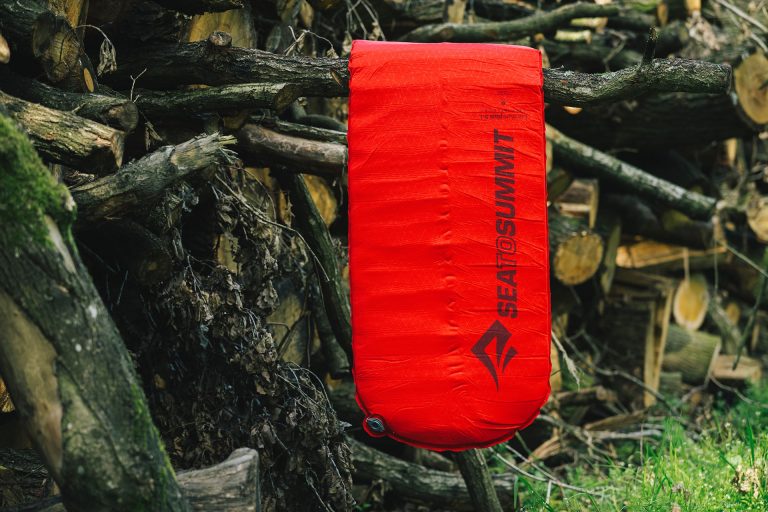
 The Sea to Summit event compression sacks are good for sleeping bags; I've never had a problem with damp down, but do make sure my sleeping bag's in its waterproof compression sack before it goes out of the tent. And before anyone says... yes, I know squishing a down bag ina compression sack is not ideal, but the rating of the bags I have to use requires me to compress them or I'd never get them in my packs, and some compression for a couple of days isn't going to do it much harm.
|
 |
.JPG) yes, I know squishing a down bag ina compression sack is not ideal,
I thought it was proven ok as long as it's dry and mostly down?(not feathers) IMO you don't need a compression sac for a lightweight down bag. Dry bags do just as good a job - or even a stuff sac. The alpkit bag came with a compression sac and also a stuff sac which is smaller than the compression sac will go! - I can get it in there if necessary.
|
 |
 Just drop your bag into a liner and put other stuff on top of it - no need for a stuffsack at all...helps packing with frameless sacks IME. I do use a stuffsack when wanting to keep volume well down though.
|
 |
 The stuff sac for my Cumulus bag is tiny, it looks like some sort of magic trick getting it in there! Long term storage is not a good idea but using a stuf sac for packing won't do any harm. The bag has to pack reasonably small to get into my Nordkapp rear hatch for kayaking. Steve D
|
 |
Scardycat: Your question was not daft but reasonable. You've read an article or book which stated the pros and cons of down and synthetic sleeping bags and you wanted advice from those of us who backpack regularly. Even greybeards like myself, who started backpacking in the late forties with ex-military kapok-filled sleeping bags, can remember how difficult it was to decide on the best equipment. It is alarming to read that you have to take great care to prevent a down sleeping bag from getting damp. As has already been pointed out, Pertex covered bags will repel a certain amount of dampness so the danger is not quite so serious as once it was.
Here's my technique for keeping everything as dry as possible in extreme conditions when solo backpacking: 1 Pitch your tent wearing your waterproofs and boots. 2 Keep the inner-tent door closed. 3 Have a sheet of plastic, cut to size, to serve as a goundsheet in the porch, and have a dry sit-mat to hand. 4 Enter the porch backwards so that your feet are towards the entrance. 5 Carefully remove your boots and waterproof jacket and place them tidily at one end of the porch. 6 Kneel to slide down your waterproof overtrousers and place the sit-mat under your fundament to protect your trousers/shorts from the groundsheet which will now be wet. 7 Remove your overtrousers. 8 Open the inner tent door and go inside. 9 Pull your rucksack close to the door of the inner tent. 10 Carefully unpack your rucksack putting clothes and sleeping bag in their respective plastic/drybags neatly into the inner tent and leaving cooking items etc in the porch. 11 Even with these precautions you are likely to find some drips of water/dampness in the inner tent so mop them up with a small sponge kept handy for this purpose in a plastic bag. 12 You are now home and dry!
Striking camp on a wet morning is the opposite of this process. I keep my down sleeping bag in its stuff sac in a stout clear plastic bag and my clothes in a similar bag. My rucksack is lined with a large plastic bag into which goes sleeping bag, clothes and I use another clear plastic bag for food and cooking gear.
I loosely fold or roll my tent into a carrier bag which then goes into the large storage net on the outside of my Gossamer Gear rucksack, and I then fit the rucksack cover.
Job done!
Never be afraid to ask questions because we are all here to help each other. I would never have become even partially competent in the use of GPS receivers were it not for the advice I have been given on this forum. Ask away!
|
 |
 One of the things I always tell my DofE groups is 'Be Organised'. I am not an organised person normally, but get quite anal when camping. Steve D
|
 |
thank you. i was concerned because although im not going on kayaking adventures with my down bag, all the advice you read is to keep it dry and although ive never managed to soak my sleeping bag some moisture is inevitable, we all breath overnight and i wanted to check that normal usuage would not damage my down bag. i take good care of equipment and hate lending stuff out unless i know the person will be equally careful. my wee brother hates that i wont lend him my gear for him going to music festivals. if i was going to have to go to great lenghts to protect even from the smallest amount of water id probably stick to synthetics. but if normal care and common sense applies im happy to splurge out in the name of warmth
|
 |
 Like you, I was really nervous about getting a down bag because of all the dire warnings about getting it wet. Unless you're a really sloppy camper or have a seriously cr*p tent that leaks like a sieve, you should be fine. Having experienced the lightness and warmth of down, and the ease of care, I'd never go back to synthetics.
|
 |