I'm in theprocess of putting together my new kit, following answers in a previous thread I decided not to buy the lightest possible rucksack, as I now understand that this could have implications in the level of comfort. Also after being told that I shouldn't buy an expensive rucksack to begin with, I spotted this one and bought it. This is my first ever ruckack, so I'm not in a position to say if its any good or not. But I would like to ask fellow members, do you always get what you pay for? and what is likely to be the difference between this one and say the Osprey exos, which I was going to buy.
I went through the lightest possible rucksack stage and hated it, the Jam packs etc, till i found this beaut, lightweight, full frame-ish and ultra comfortable.
Been using it 2 years now and whilst you do have to give the lightweight material consideration, mine is still fit for purpose.
Best bit of kit i've ever owned and see's me right for a long weekend.
mm, er...yes well a tent made of out those would be very strange!
Yes, that sack looks pretty good, and still pretty light too. I've tried mine with about 6.5 kilos, and it was very comfortable with most of the weight transfered to the hips. Not sure why a similar capacity and weight Osprey has to be £120.
There's a massive amount of snobbery and elitism connected with outdoor gear in general. A lot of the time you're simply paying for the privelege of having the fashionable bit of kit, the right name, etc. In a way I suppose it's only to be expected - after all, it's a business and has to rely on people buying new stuff all the time to keep operating.
It does annoy me a bit though, ordinary folk on a budget are hardly catered for. Just look at the price of decent waterproof jackets, even lightweight ones for fell running (often mandatory bits of kit) are not far short of a hundred quid for a half decent one.
Don't follow the crowd, look around, use the internet, use forums, and don't believe all the stuff you read in advertising booklets - sorry, outdoor magazines!
It looks fine. However, if possible try it before you buy. Rucksacks are very personal things and what suits someone else may not suit you.
I prefer sacks with the minimum amount of bells and whistles - single compartment no outside pockets to get snagged on things.
A decent sack should last a long time, so it's worth trying to get the correct one to start with. I still use my Karrimor Apiniste from about 1980. Quite battered now, but still quite usable.
But I would like to ask fellow members, do you always get what you pay for?
Usually, yes, but "better" is not as simple a concept as many people think. I have several rucksacks, and I have several rather than one because what is "best" depends very much on the job in hand.
Features are only useful if they're relevant to what you're doing (so the technical climbing pack I used to have with axe holsters, QR axe loops and gear racking was great for winter climbing but I pretty much don't do that any more so all those features would be pointless weight for me now), and since features cost money you can easily be in a Less Is More situation.
It's also the case that the Law Of Diminishing Returns cuts in with a vengeance if you're looking at top end materials and construction. You might be notionally better off with a lighter sack, but if it stretches the budget too far you might not be able to afford something lighter elsewhere that makes a bigger difference.
See your stuff as a set that works together, rather than think "I must get the best pack", then "I must get the best stove" etc. Because "best" is a lot about context you'll need to think of things together so the places they are "best" complements the other components. And you can get dragged down by a weak link, so having a premium waterproof jacket is a bit pointless if you've got a cotton T on underneath to soak up all the sweat. And so on...
Finally, bear in mind that most of what most of us does has been getting done for decades (at least) by folks with zero in the way of high tech modern kit. The stuff wasn't there if they'd had the money, and many wouldn't have had the money anyway, but they still went out and had a good time. Don't get too hung up on kit, where you're going makes far more difference, and tickets to nice places and hut fees etc. can be money very well spent.
It does annoy me a bit though, ordinary folk on a budget are hardly catered for.
I don't think this is true. There's no shortage of bargain gear that works quite reasonably well. You might not find it in Tiso's, Ellis Brigham etc. but that's not the same as it's not there.
Just look at the price of decent waterproof jackets, even lightweight ones for fell running (often mandatory bits of kit) are not far short of a hundred quid for a half decent one.
If you're fell running then you're going to be sweaty. All you need a waterproof for is to keep off the rain to stop you getting cold and you don't need anything at all high tech for that. A pac-a-mac will do the business. And if you're not, ummm, following the crowd and believing the stuff you read in the advertising booklets nothing stops you from using one.
I don't believe there is that much snobbery when it comes to rucksacks - you are going to wearing it for a long time carrying a lot of kit, so if it doesn't perform then you are really going to feel it.
Most people would give you the following advice...
"... try a few out in the size you want and buy the one which fits best and is most comfortable for you."
Its not rocket science really, if you are going to spend a lot of time with some serious weight strapped to your back, make sure its not going to rub / chaff at the contact points and you are happy with the storage options it provides.
There are a few other things you might want to consider. Some people are concerned about airflow between their back and the pack, others want a bombproof pack and don't care about the weight, some want superlight packs to help ease the overall burden and some just want a built in camelbak.
Some kit has a reputation for durability, some for adapability, some for lightness, etc. so decide what you will mostly be using it for, how much abuse its likely to have to take, and how much money you want to spend, then narrow your choices down and then try a few on.
You could save money buying the cheapest pack available, but if its not right for you, you'll spend that money, and maybe more, again.
I would try and take what you are going to put in the bag to the shop so you can get an effective comparison. I realise that might be difficult dependant on where you live.
Make sure you know what size bag you need, how to measure for that is on the web.
Most bags are not a problem if you don't not put too much in them.
> I spotted this one and bought it. This is my first ever ruckack, so I'm not in a position to say if its any good or not.
Have you got it?
Does it fit?
Is it comfortable when loaded?
TBH, it looks a bit fussy, with the little pockets on the back. There doesn't seem to be a lid, either, so it looks like an all-round zip closure for the main compartment. This isn't so bad on a small pack, but it puts a lot of strain on the zip in a bigger pack, with larger load.
£30 isn't that cheap compared to what you can get if you shop around. You can get a Berghaus Arete for £20 more, or a Eurohike 45l pack for less...
I think that, if you'd asked advice before buying, I'd have suggested looking elsewhere. And, since fit is very important in a rucksack, I'd advise buying from a real shop, where you can try the thing on.
But you've got the thing now. I hope it works for you.
i think that even with a small budget you must be prepared to sacrifce some of that (or get lucky) to find out what you want from a pack e.g. i like comfort, i want pockets and i don't mind straps whereas others want none of this.
your style of outing and if the pack is for exclusive use outdoors will dictate what's best.
Have you got it? Does it fit? Is it comfortable when loaded?.......Yes I've got it. It does fit and seems to be very comfortable, but there again, I've got nothing to compare it to. I've tried carrying it with cartons of milk inside, and after soime adjustments, the weight was transfered to my hips. I would agree that the pockets don't seem all that useful, and in fact a further 200g could easily have been saved, though the company does sell many other sacks, and all seem pretty light too.
I bought it for several reasons, but the main one was that it weighed only 1 kilo and was the right capacity for my body frame and build. To be honest, I didn't give the lid or lack off, a second thought. But to be honest, it does't really matter, because if the reality of hiking is as good as my imagined hike, I'll buy something more substantial.
....er, stupid question time...whats a lid and do all good quality ruckacks have them?
Taking care how you pack it, what goes where etc, can make the difference between comfortable or otherwise. I'm sure there's threads on here about it, tips elsewhere on t'interweb, it may well be worth looking into.
One area i do think you get what you pay for, is sleeping bags/quilts. Top quality down is expensive, but it will last you a very long time. I've got a bag around 25 years old, and it still gets a lot of use.
I've got an exos. I hated spending the money but it did make sense. The number one place I sweat is my back, and the airspace frame really does keep me more comfy (it also stinks really bad after a few days, but that just means its doing its job ). I also have a curvy back/big shoulders, and a lot of packs just sit wrong on me, the exos feels like it's moulded to me. No buyers remorse.
But, you know, I also use one of these: http://www.seatosummit.com/products/display/86 as a daypack
> whats a lid and do all good quality ruckacks have them?
Most larger rucksacks are built using what is basically a closed tube, with an open top. The top usually has a drawstring or roll-top closure. Over this is a lid to protect the top, usually with some sort of strap/clip closure. There's often a small pocket in the lid.
It's not so much about quality, as load-bearing capacity. For a small daypack, and all-round zip can be strong enough to hold the load. But for a larger pack, which has to hold a heavier load, such a zip can be over-stressed, and end up bursting open. The closed tube is a pretty robust structure.
My comment that I hoped your pack would work for you was entirely genuine; reading it back, it looks a bit sarcastic.
No offense taken. I bought the pack, as I said, because it only weighs 1 kilo, but I'm also hoping to go multi day hiking with it. However, I'm by no means sure that a 45l sack is big enough for that. So I did'nt want to buy an expensive one in case it isn't. Besides, I did look at the Berghaus Arete, but it was heavy compared to the above.
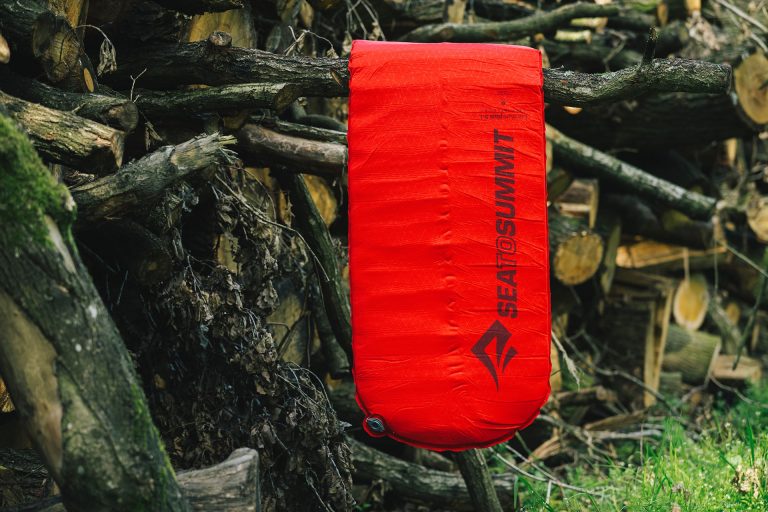
So far I've bought a Snugpak Kestrel packs very small, a white box meths stove with cosy, a POE Thermo sleeping mat - packs quite small, but a bit on the heavy side at 620g - ps this was bought for £35 from Sports Direct, if anyones interested. And my tent weighs 1.4 kilos. However, this is probably the weakest item that I have, as its the tent lidl was selling a weeks back. However, I have bought aluminium pegs Again this is a temporary step, and when I'm sure I'm going to continue wth my outdoor adventures, I'll buy something decent - I like the Terra Nova Voyager Superlite. So, all in all, I think my pack will turn out to be lightweight, but not ultralightweight.
Now that I've got most of my pack sorted out, I'll now turn to searching out appropriate walks for somebody just starting out, around the Hope Valley area.
> Besides, I did look at the Berghaus Arete, but it was heavy compared to the above.
The latest version has allegedly been honed down to under a kilo. Maybe the older ones are being knocked out cheaply.
I've got and use the POE Thermo, too. Whilst I have lighter mats, I'm prepared to carry the extra weight for the comfort and better sleep I get with the POE.