I learnt a lesson in a thunder storm, I counted the time gap between the thunder and lightening, it was quite long, it was a long way off, I was safe, I was in a forest and headed out onto a ridge.
hte storm continued, the gap between the lightening and thunder dropped second by second. there was no shelter on the ridge as the gap between the lightening and thunder dropped to a few seconds.... then to a couple of seconds, then to nothing. Luck was on my side that time, the storm passed over without hitting me.
Been in lightening a few times - varying from a gap count of a second to simultaneous. Maybe its the physicist in me, but I find it fascinating...but I also have the attitude that if its my time, its my time and its lightening or breaking my neck trying to vacate...
The only truely memorable time was when I was 18 and doing my first trip to the Alps with a few mates. We were camping in Zermatt - near the station if I remember - and stunning stormcame in one night. Each flash made each tent look like a shadow puppet theatre....and the couple in one obviously found the storm quite an aphrodisiac. No sign of him next morning, but she seemed remarkably happy with a very cheery Guten Morgen. Remarkable considering how little sleep she got.....
lightning does strike twice in the ame place, some places are ideal for lightning to keep stroking because of geology and metorology. places like Mt whitney and half dome in the states are notorious for lightning strikes and killing people who stay out in thunder storms...
I've read that technially the electrical charge from lightning is actually travelling from the ground up and you should experience a high amount of static, eg hair standing on end before the lightning strikes, I wouldnt plan on being able to avoid the lightning once you fel the static....
I've read that technially the electrical charge from lightning is actually travelling from the ground up
Yup, I'd read that too. The ground strike I mentioned above arced across from left to right and then straight down. (At least, that's how it appeared to us) It left us both with an inverted "L" shaped after-image that took several minutes to clear.
Interestingly, we saw a lot of lightning that didn't seem to groundstrike at all, just arced between clouds.
I, having been in a few lightning storms and 'supposedly' been told how to avoid beening struck. Have decided that's a lot of sh1t.
From my own experance and reading about it, (plus this post), there is no way of predicting where it will stike.
It does't always hit the highist thing, most of the time as far as I've read/seen, it 'misses' high point more often than not.
As for "conductors" on buildings, I personnely have never seen it 'hit' one.
Therefore I'm of the opinion that I'm going too keep on going. Or stay where I've camped.!!
I am in now way saying that others should should copy this. It's up to you and what you think is best!
I could be "pushing my luck", but then anything can happen in the hills. I could stumble on a rock and fall down a cliff. Who knows what will happen? I don't.
I remember having to turn a round a group of buddies about 50m from the highest peak in Ireland about 5 years ago as the cross on top took a wallop of lightning.
First time I ever saw that cross on that mountain, it was painted white. Next time I saw it, it was all scorched and blackened. I guess it got hit!
Photie taken a couple of minutes after the "biggie" mentioned above. It looks a bit wonky because the camera was sitting on a table, propped up on a fag packet while we we retreated to a safe distance indoors
The groundstrike was between us and the yellow house in the bottom right of the picture.
You are correct - lightening does travel from gound to air- this videoclip shows it nicely.
It can go either way. Normal lightning involves a positively-charged riser from the ground, and a negatively charged stepped carrier from the cloud. The riser goes up towards the negatively charged cloud initially, but once the riser meets the carrier making a circuit you get a strong flow of electrons from cloud to ground.
It does't always hit the highist thing, most of the time as far as I've read/seen, it 'misses' high point more often than not.
As for "conductors" on buildings, I personnely have never seen it 'hit' one.
There are all sorts of crazy things lightning does on its way down... it moves in steps of roughly constant length which means that a bolt could 'sneak' between two tall conductors separated by more than twice the step length and hit a short conductor between them.
I've seen the aftermath of lightning strikes on buildings where the conductor was stolen for scrap though I've never seen a strike myself. Clearly such strikes do happen when some of us aren't looking as I don't believe that the conductors are magical lightning repellents (lightning dissipation being a bit discredited these days)
I, having been in a few lightning storms and 'supposedly' been told how to avoid beening struck. Have decided that's a lot of sh1t.
Well, I can't tell you whether you've really been told how to avoid being struck, I guess I have to concur that you've only 'supposedly' been told
The suggestions to crouch down with your feet together aren't primarily to stop the lightning striking you, but to minimise the voltage drop across various useful bits of you like your heart. Standing on one leg waving your arms in the air shouting 'I don't believe in physics!' won't necessarily kill you, but there's no point in taking unnecessary risks, eh?
Fuck knows Mick, something I need to think about but I guess try to pitch lower, close to big rocks so as to have as little profile as possible?
That is not really smart. A rock isn't really conductive so if a flash 'slams' into the rock the flash sort of bounces of the rock to the nearest conductive spot. The technical term for this effect is a side flash. Well if you are next to that rock you 're truely fried.
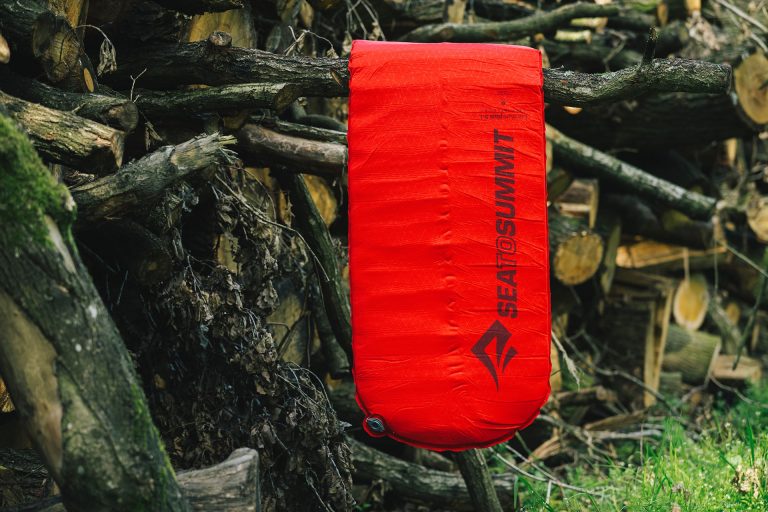
Best Changes of survival are indeed a low profile and try to put feet, hands and ass on something that's not conductive. So getting out your tent is good but use sleeping mat, empty bag to sit ly lown on. Never go to sit on clear ground. If a flash 'strikes' next to you 'in the ground' you'll get fried as well if your are in contact with the ground. Your body is more conductive than the ground hence the neede insulation between the ground and your body when you're lying low.
The lightning lessons I was taught to 'avoid' getting struck, where-
Stay as far away from rock as possible.
Don't shelter in a cave, unless it's more than 20m deep.
Stay off high points, like ridges, summits.
Don't shelter under trees.
If in the open, sit on something so "no" part of you is touching the ground, ie, a rucsac, camping mat, sheet of plastic.
If you have anything metal, axes, poles, etc. place as far from you as possible.
I'm sure there are others I've forgot. The reason I used 'supposedly', is I'm not convinced that some of them will make any differance, as to weather you'll get struck by lightning or not.