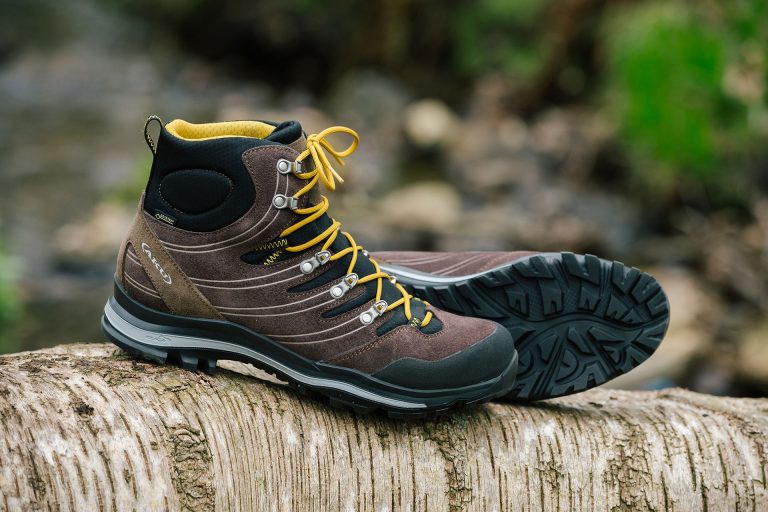
When I started hill walking in the 1980s half decent gear was really expensive and had to be saved for -- in fact I could only afford my first Goretex jacket, a Berghaus Trango, after I'd sold my flat in Manchester. Walking stuff got cheaper and cheaper after that for many years, but has now shot up in price again, which is certainly not welcome news for those with limited means. But I wonder if it might not be a good thing in other ways. It certainly makes me think very hard about buying new stuff and much more willing to make do with what I've got -- which is more than adequate for what I do.
|
 |
 It's a facet of increased manufacturing costs in the Far East and expensive specialist fabrics. It all raises interesting questions about what value for money is in the context of ourdoors kit. I don't necessarily think it's a 'good' thing that prices are going up, but it probably reflects more accurately the real costs of producing highly tecnnical equipment and clothing in relatively small quantities. And then there's the whole need/want nexus...
|
 |
 the rising prices i think will make the competition between brands even fiercer for a decreased market. perhaps some of the "technology/design" (whatever that is in outdoor clothing) will now quickly filter down into less high spec versions of basic kit - let's face it yer average decent walking jacket is well over-specced.
|
 |
 Companies have become increasingly good over the last 60? years at externalising the costs of things for all us rich westerners. These same companies are now hitting up upon the fact that we live in a world of finite resources hence prices are going up.
Going to make myself hugely unpopular but I for one think that rising prices are a good thing.... Why? because things are far too 'cheap.'
We live in a throw away society where if you don't have the latest iPod/computer/car/clothes your made to feel somehow inadequate. It's great for multinationals and there profits but this consumer society is completely unsustainable.
People recently 'complained' about the high cost of a japanese stove(s) I bought. Thing is I doubt that the Japanese person making it is being paid $30/month or that the factory is pumping its industrial waste straight into the local water course.
Guy Hurst, in his root post alludes to having to save up for decent kit.... maybe more people should be prepared to do that. To me it should be just as socially unacceptable to buy a cheap waterproof and throw it out after a year coz its falling apart as it is to drive a Hummer.
I'm not a tree hugger but when I look at the quality of life of my grandparents generation I see that much of it comes from not living in a consumer society where product obsolesces is actively built in and we work ever harder and longer just to keep up (but thats a bit off topic)
>I don't necessarily think it's a 'good' thing that prices are going up Putting aside your wallet.... why? and do you think if you where a Chinese farmer forced into the big city by starvation to make X outdoor product for slave wages your attitude would be different?
5pm Friday post huh!
|
 |
 ....Going to make myself hugely unpopular... What do you mean "...going to..."? 
|
 |
  I did actually think about that, but what the hell
|
 |
|
|
 |
I'm not sure that prices have risen that much recently, and even if production costs/exchange rates have gone up, the huge amount of competition on the high street/net is probably flattening any peak. In fact this cut-throat competition is possibly a problem, with both manufacturers and retailers cutting costs to the bone, which leads to the kind of 'screwed up' situation Alpkit talked about when they launched their new tent range. And shops like Blacks have certainly been hit by these changes, which I doubt they are going to recover from. But, like consumer electronics, it has led to much better kit for a lot less money. I remember buying my first 'proper' sleeping bag (a Snugpak Osprey) 17 years ago (a down bag was simply out of the question). The normal price was about a hundred, and I got it for about 80 from a place in Dorchester. Current price of the same thing? About a hundred! And I bet the new one is lighter and warmer. Looking at the back of the Trail Gear Guide from a while back, gear seems to have dropped about 15% in real terms, and some were even more. They quote the Berghaus Paclite at £240 in 1999, and the nearest equivelent as £150 now. After inflation, its about half the price. The other thing thats happened is that kit has got higher specced and cheaper at much the same time, partially because of new outlets. The web has flattened prices, as has TK Maxx, Ebay, etc. And Lidl/Aldi can sell a very good wicking base layer for less than a tenner. Perhaps we've got very used to kit prices falling, thanks to production in the Far East, and suddenly a relatively small rise has come as a bit of a shock. The upside of lowering costs is increased access to good kit, but I have to admit it could lead to a 'throwaway' mentality - why keep a old (but usable) fleece when the new one is so much cheaper. Perhaps what we want are stable prices, with a structure that allows retailers, etc to make a reasonable return, and prices that reflect quality and research/features. I have to admit that I never buy anything full price (my wife wouldn't let me), and I'm still using a lot of the stuff I bought at the old Ellis Brigham Victoria sales years ago. A lot of the new stuff does look really nice though...
|
 |
 Something i've noticed. Most UK mainstream gear is manufactured in the Far East, so as their costs have risen, so have our prices. I buy quite a bit of gear from US 'cottage manufacturers', and it was always more expensive than the mainstream UK gear. The US guys gear doesn't seem so expensive now, as their prices have stayed much the same, as the Far East prices have shot up.
|
 |
 I remember buying my first 'proper' sleeping bag (a Snugpak Osprey) 17 years ago (a down bag was simply out of the question). The normal price was about a hundred, and I got it for about 80 from a place in Dorchester.
Great Western Camping.
|
 |
So the cuben Trailstar doesn't seem so expensive now, Mike? 
|
 |
Kate - Your spot on! I grew up in Poole, so only found GWC when I did a stint at the Museum as part of my field requirement (2 weeks of rebagging flint ). I bought the bag a little later, when I was unemployed - my then girl-friend went nuts when she found out how much I paid. Of course the bag is still with me, the girlfriend......not! Glad to see they are still going.
|
 |
 No there were definetly some quite non trivial increases past year or two. Although a fair bit of that will have been the pound devauling. (as well as the production getting more expensive etc)
|
 |
|
|
 |
I must admit I was very tempted, but I'm saving myself for the cuben Superfly. (Don't tell my wife  )
|
 |
 At least i saved $40 by getting in early! 
|
 |
Honestly, well worth the money IMHO. And to return slightly towards the thread, I think the prices of a lot of U.S. "cottage manufacturers" are reasonable, particularly as the quality is often very high.
|
| Edited: 10/12/11 10:16 |
 Great Western Camping.
There's another Great Western Camping store where I live - it's a really good local business and supportive of my school's DofE programme. Anyway, as regards high gear prices, it seems to be a combination of increased labour costs and material costs. It's not so good for retailers or customers, but the original situation was clearly unsustainable - people are expecting higher wages (as they should) and natural resoucres are running out. If it does encourage people to throw things away less then that's obviously a good thing - although I'd have thought that most people with an interest in the outdoors would try to look after it anyway.
|
 |