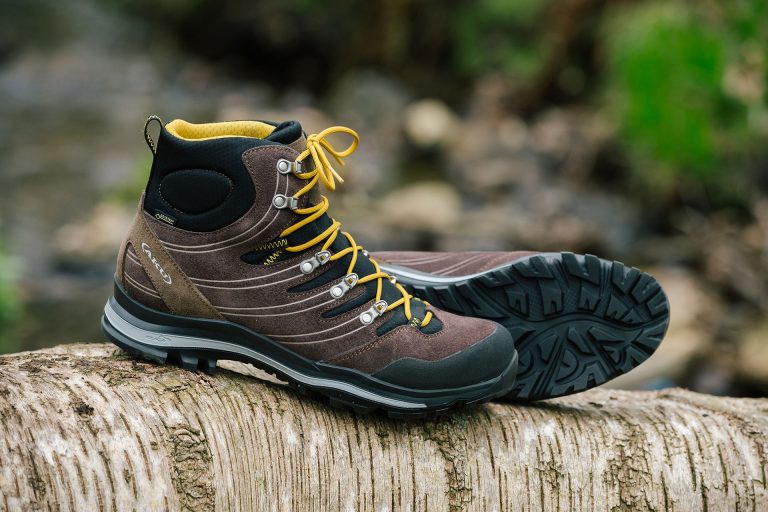
I'm wanting to get a new pair of approach shoes and so far I have seen Teva Men's Forge Pro eVent which seems like it would do the job, but there are some who say the Teva shoes are made narrow and so unsuited for folk like me with broad feet. I've also seen Meindl Respond XCR's that seem OK too, if not quite as cushioned as the Teva's. To be honest I'm feeling a bit clueless on this and I was wondering what recommendations people would have. Obviously I'm aware that fit is the most important thing, but taken that as a given, it's knowing what's good before getting to the try on stage. All help gratefully accepted.
|
 |
 I found Meindls very comfortable, but the sole was faulty. It was the Emotion rather than the Respond, I think. Despite the fault (which made me return them) still more comfortable than anything I've tried since.
|
 |
 Well there's some terrifying diversity/specalisation of design out there - inov8 have a mind boggling array of things! So you'll have to decide quite what you want them for first What sort of terrain, how long for, if scrambling or not etc. That then determines roughly what sort of sole unit/cushioning you're after. Only two things to add really, one is that the heel lock is a really important part of the fit in this sort of thing and the other that I really wouldn't get obsessed with goretex liners. Maybe they're ok if you're strictly sticking to paths etc but I've been much happier without any liner. (including wading in streams etc at need.).
|
 |
 Aproach shoes are aimed at tackling scrambling but with a level of comfort whkch makes the walk in and out more comfortable(I think) Unless you 'need' aproach shoes the world of trail running shoes is open to you as well.
|
 |
Some good points to consider - thanks. One of the problems I'm having is the diversity esp when you consider trail running shoes. What I've picked up so far is there seems to be a trend possibly for trail running shoes to emphasize grip and "feel" over cushioning/comfort. What I guess I'm looking for is something that can handle stony terrain but at a walking pace. Effectively trainers that can go on a hill, if that makes sense. Also a lot of the trail running shoes employ soft rubber for extra grip and i wonder how that works with long hikes - will they wear out quicker?
|
 |
 If you do get Inov's I'd strongly suggest you get a model with the level 3 cushioning. It's denoted by a number of V's on the sole. The ones with less can cause a lot of shin grief if you're not used to them. Personally I'd suggest Salomons I think they are better made than Inov8s and there are lots of them. Softer compound rubber will wear out quicker, how fast though is dependent on a lot of factors. Again I wouldn't bother with goretex ones.
|
 |
 new balance do a selction of shoes for walking and many have the benefit of being available in different widths which is good for wider feet and also for allowing room to use thicker socks with them. they're very comfy and cushioned. the mizuno wave range are excellent imo and are a bit wider than other brands. i use the mizuno (a running shoe) with a thin sock in summer (the width doesn't allow a thick sock for me) and the new balance with a thicker sock in cooler months.
|
 |
 It all depends on what the terrain you're walking on is. If mostly 'wild' terrain etc then you want very grippy. At an extreme thats charging up/down steep, muddy slopes without any paths (or traversing them!). For that you want as much grip as you can get, so very soft rubber and massive studs like a mudclaw. Don't really need much cushioning either as the ground does that for you. If you're doing most of your distance on made paths/roads etc, that mandates more cushioning, less need for grip etc. I've certainly got a pair semi specalised for paths/tracks etc - for me I get that on 'official' long distance walks. Lighter/grippier bits for when I'm wandering. Stony ground per se I've never found to really be a problem, made paths littered with small rocks less fun!
|
 |
Thanks for the replies. What got me started on this was do I really need a walking boot or can I get just as far with an approach shoe? I'm not going to be running in them, nor will I be on soft ground. Made paths and rocky terrain are most likely where I'll be using them. So i guess there's a trade off to be made re comfort and stability and grip.
|
 |
 I haven't worn boots for years Ian. You dont 'need' to wear boots. As most of my walking is off path hill-walking, i look for a good gripping sole. If you mostly walk on hard paths, then look for decent cushioning if you do big mileage days. I don't like waterproof shoes, as they are too low cut to keep water out on my average hike. When water gets in, it can't get out again. I prefer well draining shoes, with lots of mesh. If you mostly hike on paths, and are confident of avoiding puddles, then a waterproof membrane may work. You'll probably have to wear gaiters more often, to stop water running down your legs into the shoes though. Embrace the wet.
|
 |
 Well the answer to the first question is certainly yes. Some limitations to do with snow of course but thats basically it. For walking on made paths/a bit of rock, you'll quite likely want a bit of cushion - generally thats quite obvious from the midsole thickness - and probably not a super soft sole compound. Gives you lots of choice actually, as sundry people do do shoes like this. Salomon plentiful options for instance. I wouldn't worry about a tough outer fabric as you'll likely kill the cushioning first anyway.
|
 |