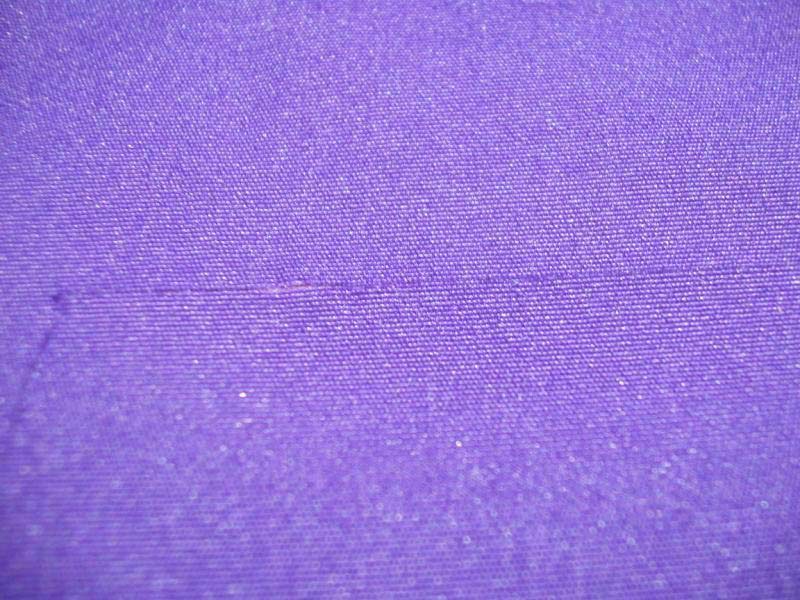
Captain Paranoia talks you through his answer to crampon cuts and other rips in shell clothing.
How to repair a cut in
waterproof clothing the Captain Paranoia way.
Yes, it's that time of year again, when
the winter
gear comes out, and you are reminded of the crampon tears and ski cuts
that you never repaired at the end of last season. So it's time to get
the repair kit out, and get ready for the snowy season.
The method I've used for more than ten years, and have passed on to
many other people who have also used it successfully, is to use iron-on
seam seal tape. This is very similar to the seam seal tape used by
manufacturers when making waterproof clothing. The advantages of it
over other methods are are that is cheap, relatively easy to apply,
seals the edges of the cut, and seems to last well.
The seam seal tape can be bought for less than £1 per metre
from
Pennine
Outdoor or
Point
North,
which should be enough for quite a few repairs. The 3-layer, reinforced
variety is preferable and adds strength to the repair.
What you will need
Apart from the seam seal tape, you'll
need the following:
- scissors
- dry iron
- an ironing board
- baking parchment (or brown
paper)
- masking tape
- a tailor's pencil
Note: the sequence below uses a
composite set of
photographs, one set taken repairing a real garment, and one using a
scrap of waterproof fabric for illustrative purposes. I hope it's not
too confusing that garment and tape keep changing colour...
WARNING: before you start, be aware that most waterproof materials can
react quite badly to high heat, so you need to satisfy yourself that
the thermostat of your iron is working. Even then, it's best to be
cautious when you start applying heat to the repair; stop immediately
if you detect any sign of the fabric melting or changing appearance
(becoming shiny, for instance).
 |
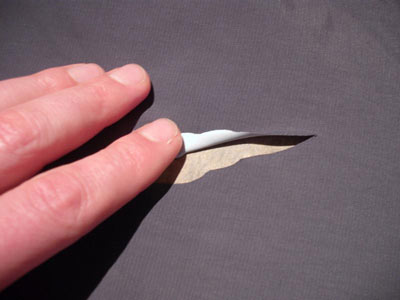
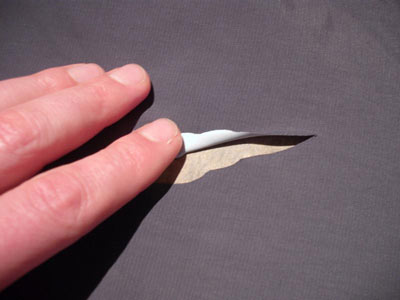
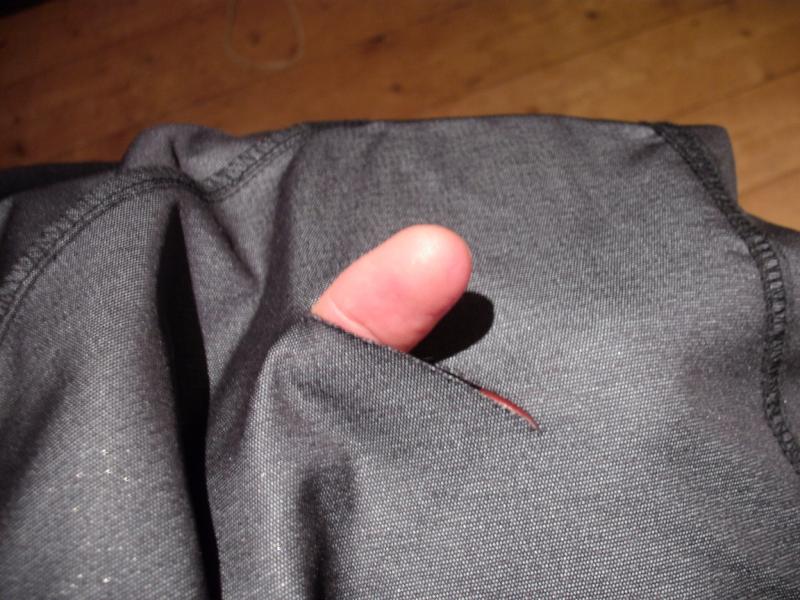
So, here's the offending hole.
This example is in a three-layer fabric, with no lining or other
complications.
|
 |
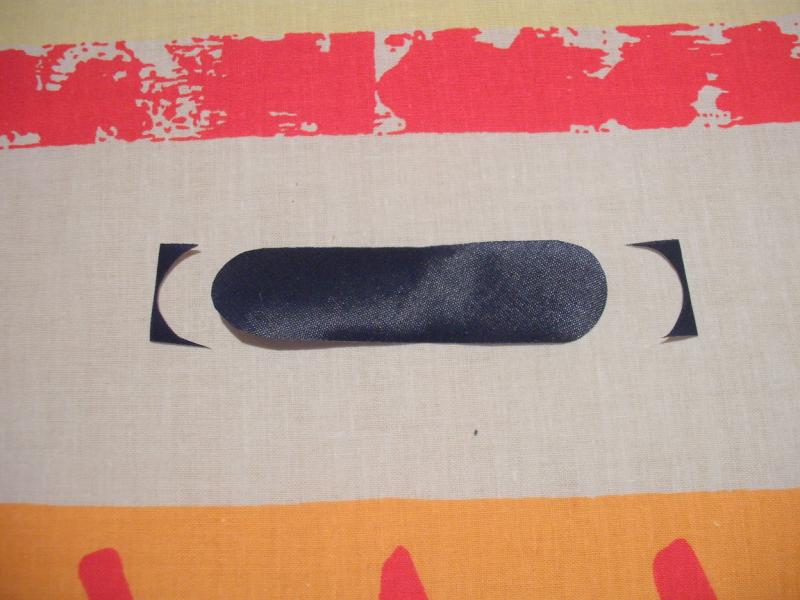
First, cut a strip of seam seal tape
about 4cm longer than the cut; this gives a 2cm overlap at each end.
Then use the scissors to round the ends of the tape. This reduces the
risk of the patch snagging on things, and being torn off. |
 |
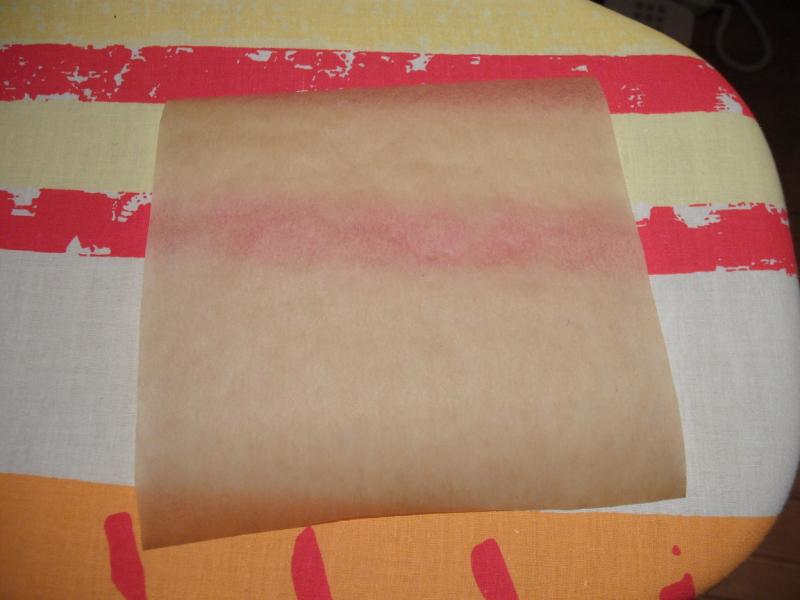
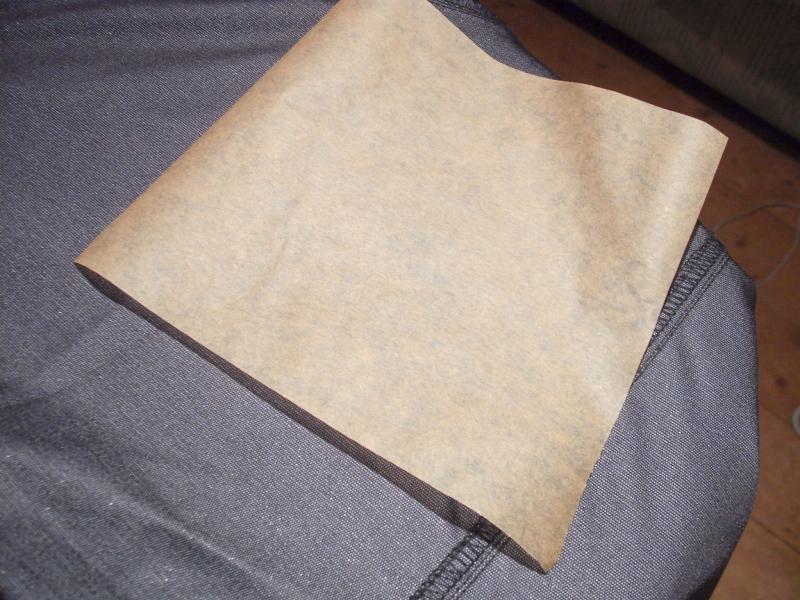
Cut a piece of baking parchment or
brown paper,
which will rest between the fabric and the ironing board, and stop the
glue sticking to the ironing board.
Cut a second piece of baking parchment as big as the base of the iron.
This will stop the iron getting glue on it, and will reduce the risk of
damaging the fabric. |
 |
Place the garment over the ironing
board, as if
you were about to iron over the cut, and smooth the fabric down. You
might need to support dangling bits of the garment on the ironing board
to stop them pulling the cut open.
Carefully align the two edges of the cut, and try to minimise the gap
between them. Without disturbing the cut, carefully place a piece of
masking tape on the cut to hold the edges of the cut together.
(Yes, I know it's suddenly changed colour...) |
 |
Now turn the garment inside out, and
arrange it
on the ironing board so that it is 'relaxed', with the fabric smooth
but not being pulled tight. Again, you might need to support bits of
the garment on the ironing board. |
 |
Line up the patch over the cut. This
can be made
easier by using a tailor's pencil to draw a line extending either side
of the cut, leaving a clearance of about 3cm either side (we don't want
chalk or wax under the patch). The centre of the patch can then be
aligned with the tailor's pencil line. |
 |
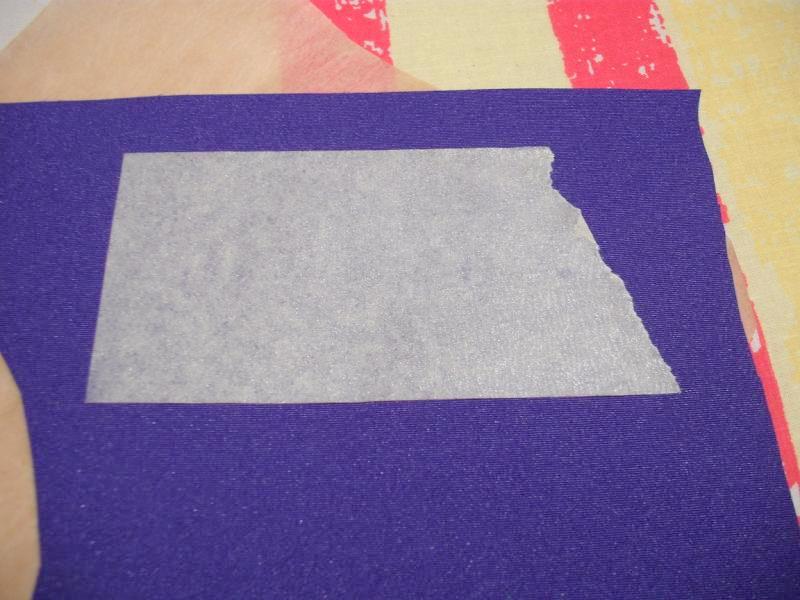
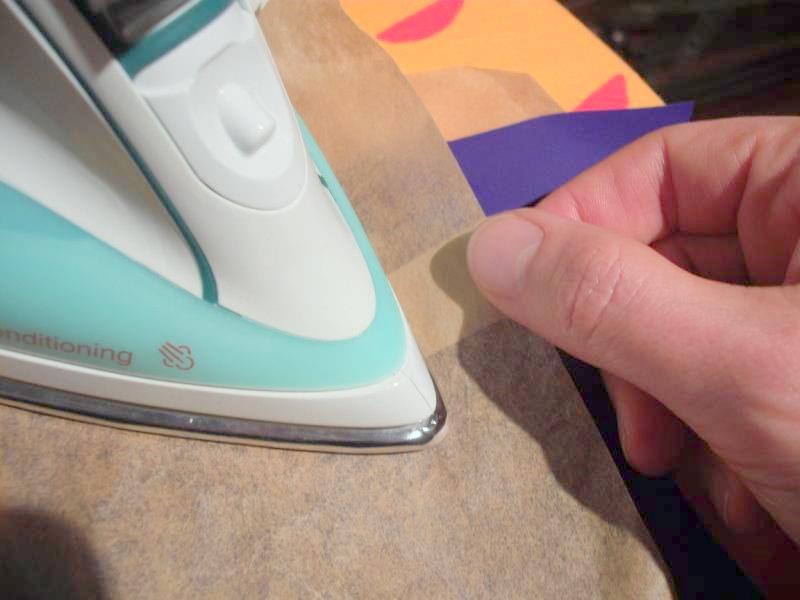
Place the second piece of baking
parchment on top of the patch, being careful not to disturb the patch. |
 |
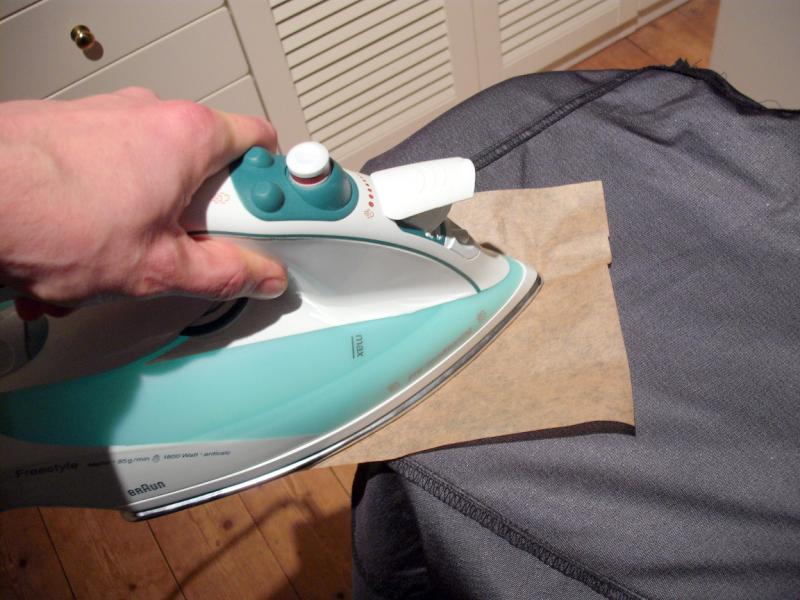
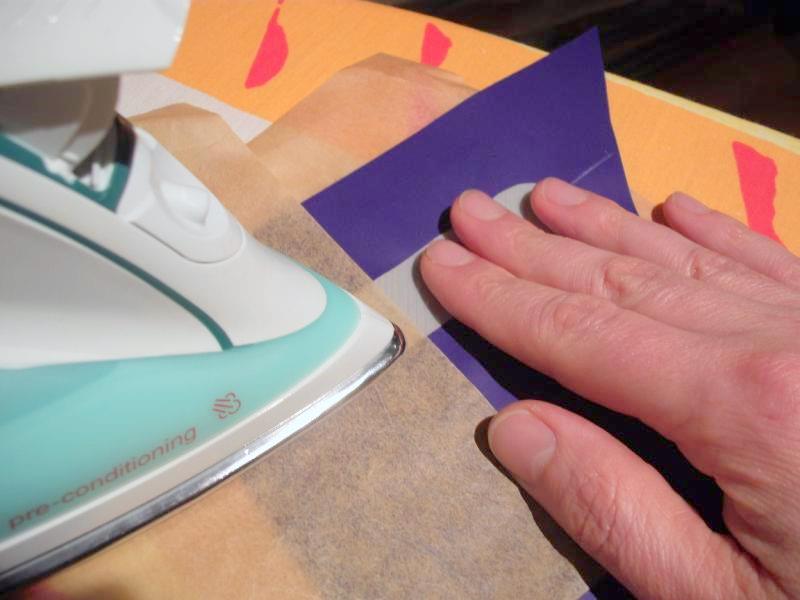
With the iron set to about 1.5 dots
(in the usual
range 0-3 dots), press the baking parchment and patch down with one
hand (not shown here: other hand holding camera...) and gently place
the whole iron over the patch area for a few seconds. This should just
tack the patch in place, allowing you to lift the paper and check that
it's still aligned properly.
If the tape isn't tacked into place, repeat for a few seconds longer.
If the glue shows no sign of melting, turn the iron up to setting '2'. |
 |
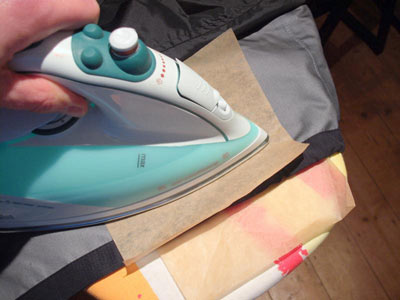
Alternatively, if you feel the need
for more control, you can tack one end of the patch with the tip of the
iron... |
 |
... and then move the iron along the
cut, feeding
the tape and baking parchment under the iron, guiding the tape into
place along the cut.
Bear in mind that you need to do this quite quickly, so as not to
overheat the fabric; we're looking for a contact time of about 20
seconds or so. |
|
When you're happy that the patch is
in the right
place, now is the time to remove the masking tape. You may need to let
the whole thing cool down completely to do this to 'set' the masking
tape glue again. A short spell in the freezer can help. |
 |
Now we can fix the patch firmly.
Replace the
baking parchment over the patch, and use tip of the iron to press down
firmly for about twenty seconds, during which time you can run the tip
of the iron up and down the length of the patch; imagine pressing the
collar of a shirt. Try not to run the iron across
the cut, as this can encourage the sides of the cut to open up. |
 |
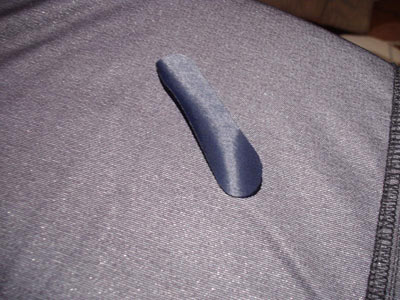
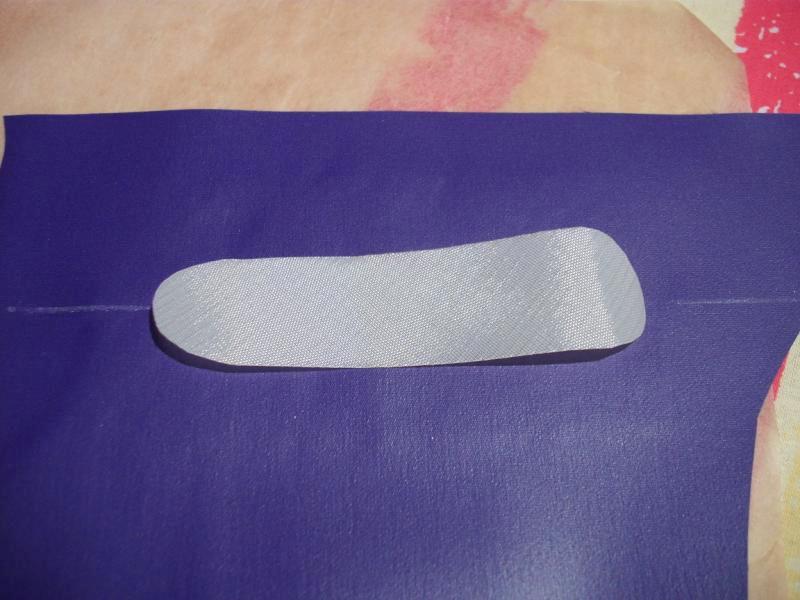
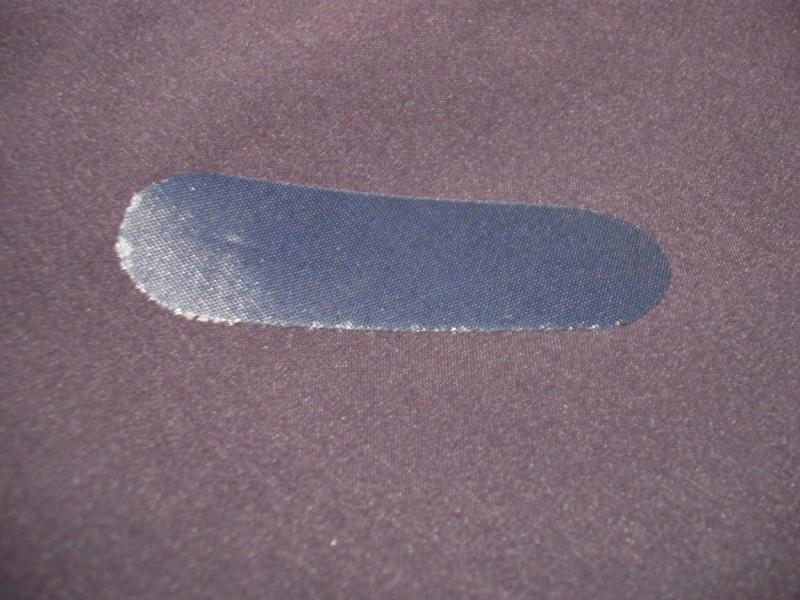
Here's a picture of the finished
result. If the
glue has melted properly, you may see shiny specks around the edge of
the patch, where glue has been pressed out, or the patch has moved
slighly during pressing. Let the patch cool completely, and then try to
peel the edges; you should not be able to shift the patch at all. If
the edges show any sign of lifting, re-apply the iron for a little
longer. |
 |
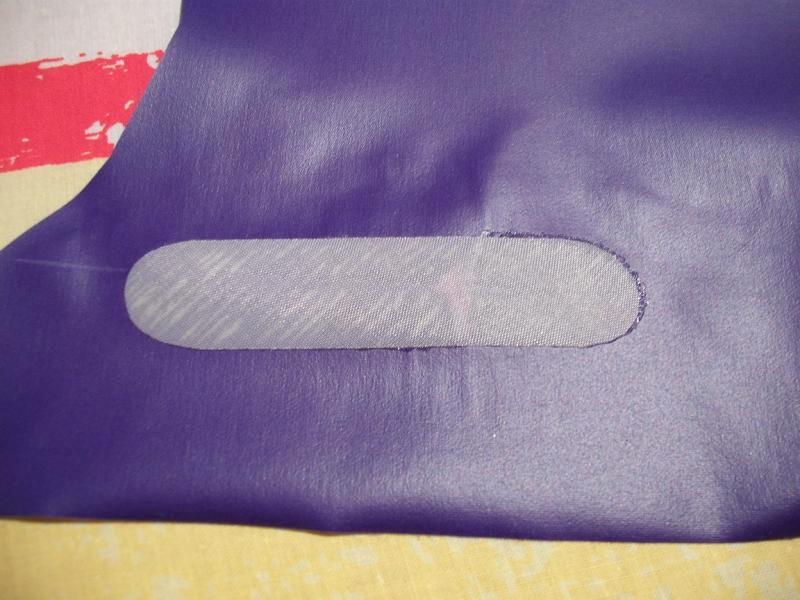
Here's the other example. I'd peeled
the tape off
once, using a reverse of the tape feeding process, trying to get a
perfect result for the article. It didn't quite turn out like that. It
does show how the glue extends around the edge, though... |
 |
Well, it didn't turn out that
badly. See if you can spot the join. |
Lined
items
Garments
that are lined pose a
bit more of a complication if you want to apply a patch on the inside
(for cosmetic reasons). Whilst the baking parchment and tape can go
through the hole before the patch is applied, it's a bit harder to
remove the paper afterwards. One way is to cut a small hole in the
lining, and remove the paper through the hole, and sew the hole up
afterwards (a blanket stitch works well with mesh and micropile
linings). Of course, you can risk not using the paper, and having the
lining stick to the patch...
 |
Here's an example of a pair of
salopettes with a
micropile lining. I've already put the paper in the hole, and aligned
it. All that's needed is to insert and align the tape. Again, the
tailor's pencil can come in handy; in this case, draw a couple of dots
in the centre of the tape, slightly inside the ends of the cut. You can
use these to align the patch relative to the cut.
Applying heat from the 'other side' of the patch allows you to see
exactly where the iron is, so you can fix the tape to one side of the
repair, and then carefully align and fix the tape to the other side of
the repair, ensuring a very neat join.
|
That's about it.
Notes
For
patches in stressed areas
(knees, seat, etc), it may be worth applying a patch on both sides of
the fabric, to provide more mechanical strength to the repair.
For sleeves and trouser legs that won't fit onto the ironing board
(unless you have one of those special 'sleeve boards'), you'll need to
flatten them as well as you can, and insert the baking parchment inside
the arm or leg, to stop the glue sticking the sides together.
If the patch starts to come undone in use, you can simply re-apply heat
to the tape again, to re-glue it.
If you do end up with glue on the iron, find a piece of scrap fabric
such as an old t-shirt, turn the iron up to 3 and rub the glue off onto
the t-shirt.
Note that not all waterproof coatings are compatible with the glue used
in the tape. Polyurethane and neoprene coatings work very well, and
most 3-layer fabrics will also take the glue well (binding the to inner
'scrim'), but pure, 2-layer ePTFE fabrics may not work (air permeable
Gore-tex and Event); I've not had to repair these yet, so I can't say
whether they'll work. You can always stick the patch on the outside.
The glue won't stick to silicone-coated fabrics.
© 2009 Kevin Beeden, aka captain paranoia